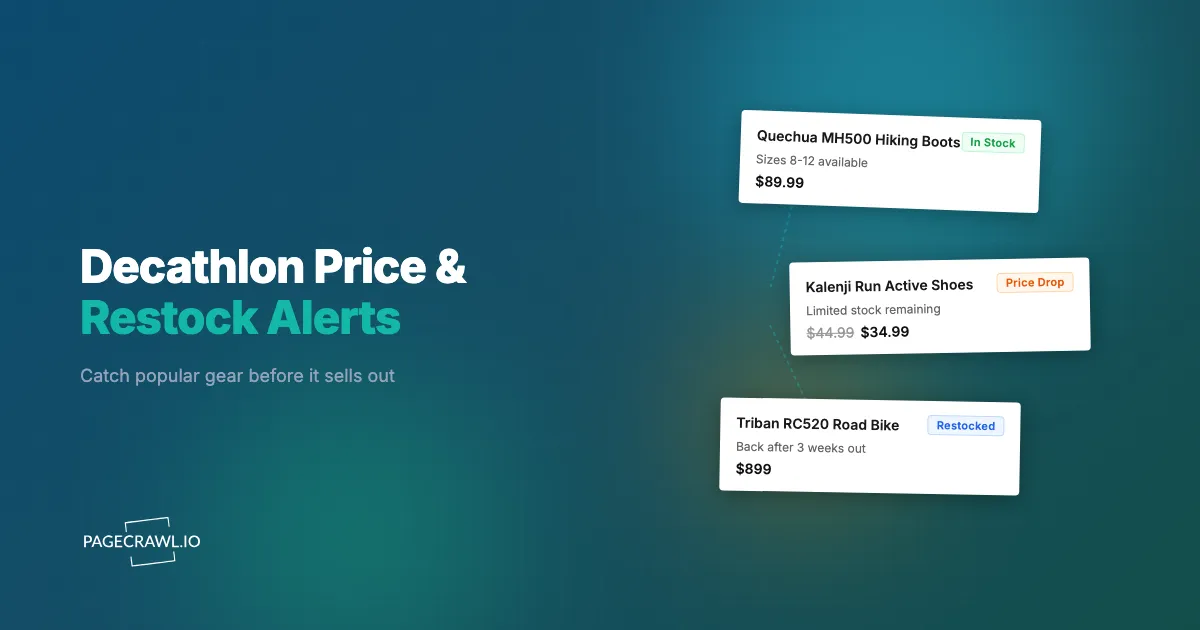
The Van Rysel RCR road bike in your frame size went from "Notify me" to "Add to basket" at some point overnight. You found out at 9am when a forum thread lit up, opened the page, and the size you needed was already greyed out again. Two weeks earlier a set of Corength weight plates sat sold out for a month, restocked for a few hours, and vanished. Decathlon makes excellent gear at prices that undercut almost everyone, and that is exactly why the good stuff never waits around for you.
Decathlon runs on a model that creates constant scarcity without trying to. Most of what they sell is own-brand (Quechua, Kiprun, Domyos, Corength, Van Rysel, Forclaz, Tribord), produced in defined runs rather than reordered on demand. Popular sizes and colours sell through, restock unpredictably, and seasonal gear disappears entirely when the season turns. The value pricing means demand outruns supply on exactly what enthusiasts want most: bikes, home-gym equipment, hiking boots, and camping kit.
This guide covers why Decathlon gear sells out so fast, what is worth monitoring on decathlon.co.uk or decathlon.com, why the site's own "Notify me" button keeps letting you down, and how to set up automated alerts that reach you as soon as a check spots your size back in stock or your price target hit.
Why does Decathlon gear sell out so fast?
Decathlon gear sells out fast because nearly everything is own-brand stock made in fixed production runs, not endlessly reordered inventory. Popular sizes and colours sell through quickly, seasonal sports gear is pulled when the season ends, and the aggressive value pricing means demand consistently exceeds supply on the items enthusiasts want most.
Own-brand production runs
Most of Decathlon's catalogue is designed and produced in-house under brands like Quechua, Kiprun, and Van Rysel. A model and colourway is built for a production window, shipped, and sold. When a popular size sells through, replenishment depends on the next run rather than a quick reorder, so gaps of weeks or months are normal. Some items restock reliably, others quietly never return in that exact spec, which is why you cannot assume a sold-out item will come back.
Seasonal sports cycles
Decathlon rotates inventory hard around the sporting calendar. Ski gear (Wedze) floods in for winter and clears by spring, camping and hiking kit (Quechua, Forclaz) peaks in late spring and summer, and watersports gear (Tribord, Subea) lands ahead of the warm months. When a season ends, remaining stock sells through on clearance and is not replenished until the following year. Monitoring catches the final in-season restocks before gear is gone, and new seasonal arrivals on the first check after they hit the site, the same way outdoor fans track Patagonia gear restocks when seasonal favourites return.
Core gear with persistent demand
Certain Decathlon products are in demand all year regardless of season:
- Van Rysel road bikes (RCR, NCR): Race-grade frames at prices that embarrass premium brands. Popular sizes sell out on arrival and stay gone for stretches.
- Corength and Domyos home-gym gear: Adjustable dumbbells, weight plates, kettlebells, and pull-up bars. Home-fitness demand keeps these tight, especially around January.
- Kiprun running shoes (KD900, KS900): Carbon-plated trainers that punch far above their price and sell through new colourways quickly.
- Quechua tents (2 Seconds, Air Seconds, MH100): The iconic pop-up range that sells out across sizes every camping season.
- Forclaz and Quechua hiking boots (MH500, MH900): High-turnover footwear where mid-range sizes go first.
- Rockrider mountain bikes and Simond climbing gear: Value builds and cult-following hardware that both run on thin stock.
These core lines restock more often than seasonal items, but popular sizes still disappear fast.
Size and colour distribution
Decathlon allocates inventory on a bell curve. Common shoe sizes (UK 8-10 men's, UK 5-7 women's) and clothing sizes (M-L) carry the highest demand and sell out first, the same fast-moving sizing that drives Abercrombie & Fitch restock alerts on viral apparel. Bike frame sizes cluster the same way: the most-requested medium and large frames go before the extremes, which linger longer but arrive in smaller allocations. If your size sits in the high-demand middle, you compete with the largest group of buyers for the smallest slice of stock, so size-specific monitoring is essential.
What should you monitor on Decathlon?
Monitor the specific product pages for the items, sizes, and colours you want, plus the clearance section for price drops and the category or new-arrivals pages for fresh releases. Targeted product-page monitoring is the highest-value approach because it alerts you to your exact size restocking rather than a vague "something changed" signal.
Individual product pages by size and colour
The most precise approach is product page monitoring for the exact item, colour, and size you want. When your size comes back, the page changes from unavailable to available and triggers an alert. Decathlon product pages show size availability as selectable buttons that are greyed out when sold out and become active again on restock, a change automated monitoring detects.
Create a monitor on the specific variant URL rather than the generic product listing. For the full picture on availability tracking across any retailer, see our out-of-stock monitoring guide.
The clearance and sale section
Decathlon's clearance area (end-of-line and seasonal markdowns) is where the best value lives and where popular sizes evaporate fastest. Items get marked down 30-50% off as ranges are discontinued or seasons close, and stock there sells faster than full price because the value is so high.
Monitor the clearance category for your sport using content tracking mode to detect when new products are added. This is a broad alert that says "something new appeared in clearance," exactly what you want when hunting deals across a whole category.
New arrivals and new model drops
Decathlon adds new colourways and entirely new models throughout the year, with bigger waves around season changes and major refreshes (a new Kiprun shoe generation, a new Van Rysel frameset). Monitoring a new-arrivals or "latest products" page flags releases on the next check after they appear, and for highly anticipated drops, hearing about them within minutes rather than hours gives you the best shot at your size before the enthusiast crowd clears it out. To catch any new model within a sport you follow, monitor the category page instead of a single product. This mirrors how shoppers track back-in-stock and sale alerts at ASOS and other fast-moving retailers.
Why isn't Decathlon's own stock alert enough?
Decathlon's "Notify me" button is unreliable as your primary strategy because it is email-only, often delayed, and frequently ignores which size you need. By the time a batched email lands and you reach the site, the popular size is gone again, and it never alerts you to price drops at all.
Delayed and batched notifications
The "Notify me" email rarely arrives while an item is still in stock. These alerts are batched and sent on the retailer's own schedule. By the time you receive it, open it, and try to check out, a popular bike or shoe size can already be sold out again. For high-demand gear, even a 30-minute lag often means missing the window entirely.
No size specificity
The basic alert frequently fails to distinguish sizes. You can get a notification that an item is back, rush to the page, and find only the sizes you do not need are available. Your size never actually restocked, but the alert fired anyway, which trains you to ignore the alerts that do matter.
Email only, no push
Decathlon's notification is email. No push to your phone, no Slack message for your buying group, no webhook into an automation. Email is the slowest channel for time-sensitive restocks and the one you are least likely to check at the exact minute it matters. Faster channels exist if you set them up yourself, as covered in our guide to web push notifications for change alerts.
No price-drop alerts
The "Notify me" button is for stock, not price. It does nothing when a Quechua tent drops into clearance or a Kiprun shoe gets marked down for a sale event. If you want the item you already like at a lower price, the retailer gives you no way to be told. Independent monitoring closes that gap, the same way shoppers track Amazon price drops on gear they have been eyeing.
How do you set up Decathlon monitoring with PageCrawl?
Add the exact product variant URL to PageCrawl, choose price or stock availability tracking, set a check frequency that matches how hot the item is, and route alerts to a fast channel like Telegram or Discord. PageCrawl watches the live page and notifies you as soon as a check detects the restock or price change, overcoming every limitation of the site's own button. Checks run as often as every 2 minutes on paid plans and hourly on the free plan.

Basic restock monitoring setup
Step 1: Open the Decathlon product page for the exact item, colour, and size you want, make sure it reflects your specific variant rather than the generic listing, then copy the URL.
Step 2: Add the URL to PageCrawl. For "is my size back?" use availability tracking mode. For "did the price drop?" use price tracking mode, which auto-detects the price and watches availability at the same time. The reference on available tracked element types explains what each mode captures.
Step 3: Set your check frequency to match the item's heat. For high-demand gear (Van Rysel frames, Corength weight plates, new Kiprun colourways), check as often as your plan allows to catch short windows. For slower-moving items, every few hours is plenty.
Step 4: Configure notifications. Telegram or Discord push notifications give you the fastest alerting for time-sensitive restocks, where you need to know within minutes, and the walkthrough for Telegram change notifications takes about two minutes to follow. For a team or household buying group, route alerts into a shared channel as described in our guide to website change alerts in Slack.
Step 5: Enable screenshot capture. Decathlon pages show size availability and pricing visually, so a screenshot lets you confirm which sizes are genuinely buyable as soon as an alert lands.
The free tier (6 monitors / 220 checks per month) is enough to prove this out on the items you care about most before you scale up.
Monitoring multiple sizes across multiple products
Most Decathlon shoppers want several items in their specific size or frame. A realistic monitoring list might look like:
- Van Rysel RCR road bike, frame size M
- Corength 20kg adjustable dumbbell pair
- Kiprun KD900 in your shoe size and current colourway
- Quechua MH500 hiking boots in your size
- Air Seconds 4.1 family tent
Each item needs its own monitor on its specific variant URL. Group them in a PageCrawl folder like "Decathlon Wishlist" so they stay together and are easy to review or prune. A focused five-item wishlist fits inside the free tier; a larger list of variants plus clearance and new-arrivals trackers fits the Standard plan.
Tracking price drops on gear you already want
Some Decathlon gear is in stock but at full price, and you would rather wait for a markdown. For these, use price tracking mode on the product page and set a target. PageCrawl tells you when the price falls, so you buy at the number you wanted rather than refreshing the clearance page on the off chance. You can layer conditional alerts with price and keyword thresholds so you are only pinged when the price crosses a level worth acting on. The same fullpage content mode applied to a category page (road bikes, trail-running shoes) makes you first on a new Kiprun generation or Van Rysel frameset once a check picks it up.
When does Decathlon restock and drop prices?
Decathlon restocks and discounts on a roughly seasonal rhythm: new in-season gear arrives ahead of each sport's peak, clearance markdowns land as seasons close, and own-brand restocks follow production and shipment cycles rather than a fixed weekly schedule. Major sale events (seasonal clearances, Black Friday) drive the steepest drops and the fastest sell-throughs.
Seasonal transitions
The biggest swings happen at season boundaries. Outgoing ranges hit clearance as new-season stock arrives, so late winter is prime time for discounted ski gear and late summer for marked-down camping kit. These end-of-season markdowns are the cheapest you will see an item, but popular sizes sell through fast once the discount is live, which is why fast notification matters most here.
Sale events
Decathlon runs periodic promotions and a substantial Black Friday and seasonal-sale presence. During these events, popular gear is both discounted and heavily bought, so the window between "price drops" and "size sold out" is at its narrowest. Sale periods are the single highest-value time to have alerts running, because manual checking cannot keep pace.
Restock cadence
Own-brand restocks track production and inbound shipments, not a public schedule, so they are unpredictable. An item sold out for weeks can reappear without warning and sell out again within hours. There is no weekly rule to exploit, which is exactly why continuous monitoring beats guessing the timing yourself.
How do you build a complete Decathlon strategy?
Build your monitoring in tiers by priority and compare across retailers so you buy at the best overall deal. A tiered setup keeps you focused on must-have items at high frequency while still catching opportunistic deals and new releases across the sports you follow.
Tiered monitoring approach
Organise monitors by priority:
Tier 1 (must-have): Specific product, size, and colour combinations you want urgently, like a Van Rysel frame in your size. Check at high frequency with push notifications.
Tier 2 (nice-to-have): Gear you would buy at the right price or when convenient. Check less often.
Tier 3 (discovery): Clearance, new-arrivals, and sport category pages for spotting deals and new releases. Check at a relaxed cadence.
This keeps your most important alerts crisp while casting a wide net for bargains. Outdoor shoppers use the same tiered play to track REI member-sale gear restocks and time purchases around discounts.
Cross-retailer comparison
Decathlon undercuts most rivals on own-brand gear, but for third-party brands or comparable alternatives, the best price may sit elsewhere. Monitor the same or equivalent product across multiple stores so you buy from whoever is cheapest and in stock. Our guide to cross-retailer price comparison monitoring walks through this, and the same approach works for premium outdoor labels covered in our Patagonia and Arc'teryx restock and sale guide.
What are common challenges with Decathlon monitoring?
The main challenges are dynamically loaded page content, the gap between online stock and per-store availability, and routine page elements that change without meaning anything. PageCrawl handles dynamic content with a full browser engine and lets you click any noisy element (review counts, "recommended for you" carousels, recently viewed items) to ignore it, so after a check or two you only receive alerts for genuine stock and price changes.
Dynamic page content
Decathlon pages load product details, pricing, and availability after the initial render. PageCrawl loads pages with a full browser engine, so dynamic content settles the same way it does in your browser before the page state is captured. Size buttons, prices, and stock indicators are fully present when monitoring reads the page, so you do not get false "unavailable" readings from content that had not loaded yet.
Store stock versus online stock
Decathlon distinguishes online delivery stock from click-and-collect availability at individual stores, so an item can be unavailable online but in stock near you, or the reverse. Decide which signal you care about and monitor the page state that reflects it. If your local store matters, set your store or postcode context first so the availability you watch is one you can act on.
Choosing your PageCrawl plan
PageCrawl's Free plan lets you monitor 6 pages with 220 checks per month, which is enough to validate the approach on your most critical pages. Most teams graduate to a paid plan once they see the value.
| Plan | Price | Pages | Checks / month | Frequency |
|---|---|---|---|---|
| Free | $0 | 6 | 220 | every 60 min |
| Standard | $8/mo or $80/yr | 100 | 15,000 | every 15 min |
| Enterprise | $30/mo or $300/yr | 500 | 100,000 | every 5 min |
| Ultimate | $99/mo or $999/yr | 1,000 | 100,000 | every 2 min |
Annual billing saves two months across every paid tier. Enterprise and Ultimate scale up to 100x if you need thousands of pages or multi-team access.
Decathlon gear ranges from a few pounds for accessories to four figures for a Van Rysel build, and the best deals do not wait for you to check during a coffee break. Standard at $80/year covers 100 pages, enough for a full wishlist of variants alongside clearance and new-arrivals trackers, and catching one in-demand restock easily covers the cost for the year. Enterprise at $300/year handles 500 pages, suiting enthusiasts and resellers tracking broad catalogues across multiple sports and frame sizes.
Getting Started
Pick the one Decathlon item you want most right now. Open the product page for your exact size and colour, copy the URL, and set up an availability or price monitor in PageCrawl. Point notifications at Telegram or Discord so a restock or price drop reaches your phone on the next check instead of hours later.
Run that monitor for a week and watch how often the page actually changes. You will almost certainly catch at least one restock or markdown, even on popular gear, and seeing the pattern firsthand makes it obvious why automated monitoring beats manual refreshing. Then expand: add your full wishlist, set up clearance trackers, and add a new-arrivals monitor to be first on the next big drop.
Stop refreshing Decathlon. Let the alerts come to you.