TikTok Shop has gone from a novelty to a serious ecommerce channel in under three years. A product that barely exists on Monday can be the platform's breakout seller by Friday because a creator's video went viral. Prices shift as sellers react to demand spikes, competitors pile onto trending products, and flash deals rotate through the platform. If you are selling on TikTok Shop, sourcing products that appear there, or simply trying to buy something before it sells out, staying on top of what is happening requires more than occasional manual checks.
The challenge is that TikTok Shop operates differently from traditional ecommerce platforms. Pricing is tied to creator commissions, live shopping events, and platform promotions that change rapidly. Inventory can go from abundant to sold out within hours when a video gains traction. Seller storefronts are harder to browse than Amazon or Walmart listings, and there are no built-in price history tools.
This guide covers what you can track on TikTok Shop, how the platform's unique pricing model works, and how to set up automated monitoring for prices, availability, trending products, and competitor activity.
Why should you monitor TikTok Shop?
Because prices, stock, and product assortment on TikTok Shop move faster than on any other marketplace, and the platform gives buyers and sellers no price history to work from. Monitoring gives you the record the platform withholds: what a product actually cost last week, when it sold out, and what competitors changed.
TikTok Shop is among the fastest growing ecommerce channels in most Western markets, and its US gross merchandise value has climbed into the billions of dollars in only a few years. That growth creates opportunities and risks that require monitoring.
Viral Product Cycles Move Fast
TikTok's algorithm can turn an unknown product into a bestseller overnight. A skincare serum, a kitchen gadget, or a phone accessory gets featured in a viral video, and suddenly every seller on the platform is listing it. Early movers capture most of the margin. By the time you discover a trending product manually, the window for profit may already be closing.
Monitoring trending products and new seller listings lets you spot these opportunities earlier. Instead of scrolling TikTok hoping to catch the next viral product, you can track specific categories, hashtags, and top sellers systematically.
Competitor Pricing Is Aggressive
TikTok Shop sellers compete on price more aggressively than sellers on Amazon or Walmart Marketplace. The platform's fee structure is lower, and many sellers are willing to accept thin margins to build volume and reviews. A product you sell for $24.99 might appear from a competitor at $18.99, and their price might drop further during a live shopping session.
Without monitoring, you discover competitor pricing only when your own sales decline. Automated alerts tell you on the next check when a competitor changes their price, lists a new product, or runs a promotion.
Availability Changes Without Warning
TikTok Shop inventory is volatile. Products sell out during viral moments, then restock unpredictably. Sellers enter and exit the platform frequently. A product that was available from five sellers last week might only have one seller this week, or none at all.
For buyers, stock availability monitoring means getting notified on the next check after a sold-out product returns. For sellers, it means knowing when competitors go out of stock (an opportunity to capture their customers) or when a supplier you depend on restocks.
What can you track on TikTok Shop?
You can track five things reliably: product prices (current and crossed-out), stock status and variant availability, whole seller storefronts, review counts and ratings, and trending or bestseller collections. Each is a public page element, so each can be checked on a schedule and compared against the previous check.
Product Prices
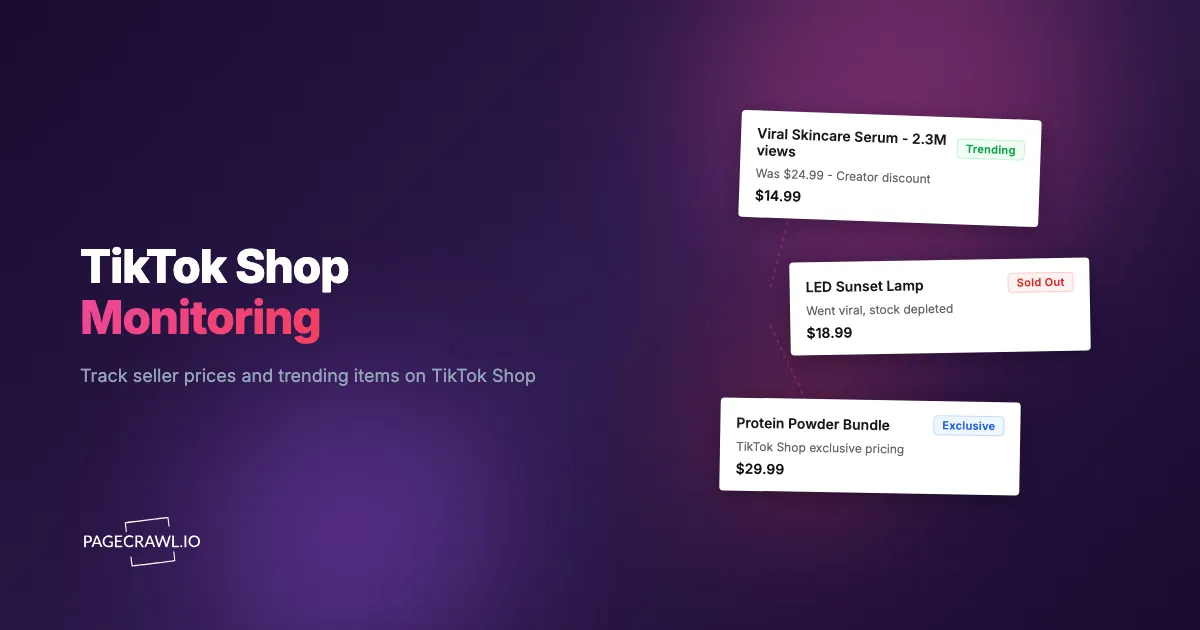
Every TikTok Shop product page displays a current price, and often a crossed-out "original" price showing the supposed discount. These prices change frequently based on seller promotions, platform campaigns, and commission structures. Tracking the actual selling price over time reveals patterns: when a seller typically discounts, how deep the discounts go, and whether a "sale" price is genuinely low or just the product's normal price with inflated savings numbers.
Product Availability and Stock Status
TikTok Shop shows whether a product is in stock, and some listings display remaining quantity for specific variants (sizes, colors). Stock status changes quickly, especially for trending items. Monitoring availability is essential for both buyers waiting to purchase and sellers watching competitor inventory.
Seller Storefronts
Each TikTok Shop seller has a storefront page listing all their products, ratings, and order counts. Monitoring a competitor's storefront reveals when they add new products, remove underperforming ones, or change their pricing across their catalog. For brands, monitoring authorized and unauthorized sellers shows who is selling your products and at what price.
Product Reviews and Ratings
Review counts and average ratings affect a product's visibility in TikTok Shop search results. Tracking these metrics over time shows how a competitor's reputation is changing, whether a product is gaining traction, or whether a supplier's quality is declining.
Trending Product Pages
TikTok Shop features trending product collections and category bestseller lists. Monitoring these pages alerts you when new products enter the trending charts, helping you spot viral products earlier.
How does TikTok Shop pricing work?
A TikTok Shop price is the sum of several moving layers: the creator commission the seller pays, platform fees and occasional TikTok subsidies, flash-deal and campaign discounts, live-stream-only pricing, and quantity-based bundle tiers. Understanding these mechanics is important for interpreting the price data you monitor.
Creator Commissions
TikTok Shop's primary sales channel is creator-driven content. Sellers set commission rates in TikTok Shop Seller Center for creators who promote their products, commonly a double-digit percentage of the sale price. These commissions are built into the product price, meaning TikTok Shop prices are often higher than the same product on other platforms to account for the creator's cut.
When a seller lowers their commission rate, they sometimes reduce the product price as well. Monitoring price changes alongside commission structure changes (visible on some product pages and affiliate marketplaces) gives a fuller picture of a seller's strategy.
Platform Fees and Subsidies
TikTok charges sellers a referral fee on each sale, and occasionally subsidizes pricing to drive platform growth. During subsidy periods, product prices may be artificially low, funded partly by TikTok rather than the seller. These subsidies can end abruptly, causing prices to jump. Tracking prices over weeks and months reveals whether a low price is sustainable or subsidy-driven.
Flash Deals and Limited-Time Promotions
TikTok Shop runs flash deals, daily deals, and themed sale events. These promotions offer steeper discounts for limited periods, sometimes just a few hours. Flash deal prices can sit well below the regular selling price. The deals rotate, so a product in today's flash sale may not appear again for weeks.
Frequent monitoring (hourly or more) catches these short-lived discounts. If you are a buyer watching for the best price, a flash deal alert can save significant money. If you are a competitor, knowing when rivals participate in flash deals helps you anticipate their pricing strategy.
Live Shopping Discounts
Live shopping is a major sales channel on TikTok Shop. Sellers and creators host live streams where they offer exclusive discounts to viewers. These live-only prices are often the lowest available for a product, but they are temporary and unpredictable. Some sellers run daily live sessions with consistent pricing, while others go live sporadically.
While live stream prices are harder to monitor automatically (they exist only during the stream), monitoring the regular product page price before, during, and after live sessions reveals how much the seller discounts for live events and whether those discounts persist afterward.
Bundle and Multi-Buy Pricing
Many TikTok Shop sellers offer bundle discounts. Buy one for $15.99, buy two for $13.99 each, buy three for $11.99 each. The per-unit price varies based on quantity, and sellers adjust these tiers frequently. If you are comparing prices across platforms, make sure you are comparing the same quantity tier.
Setting Up Automated Monitoring with PageCrawl
PageCrawl monitors TikTok Shop product pages, seller storefronts, and category pages automatically. Here is how to set it up.

Monitoring a Product Page
Copy the URL of the TikTok Shop product you want to track and add it as a new monitor in PageCrawl, using the same product page monitoring setup that works on any storefront. For price tracking, use the price tracking mode, which automatically detects the product price, original price, availability status, and product name. PageCrawl checks the page on your configured schedule and records price and availability changes over time, building the charts described in the guide to monitoring numeric values to spot trends.
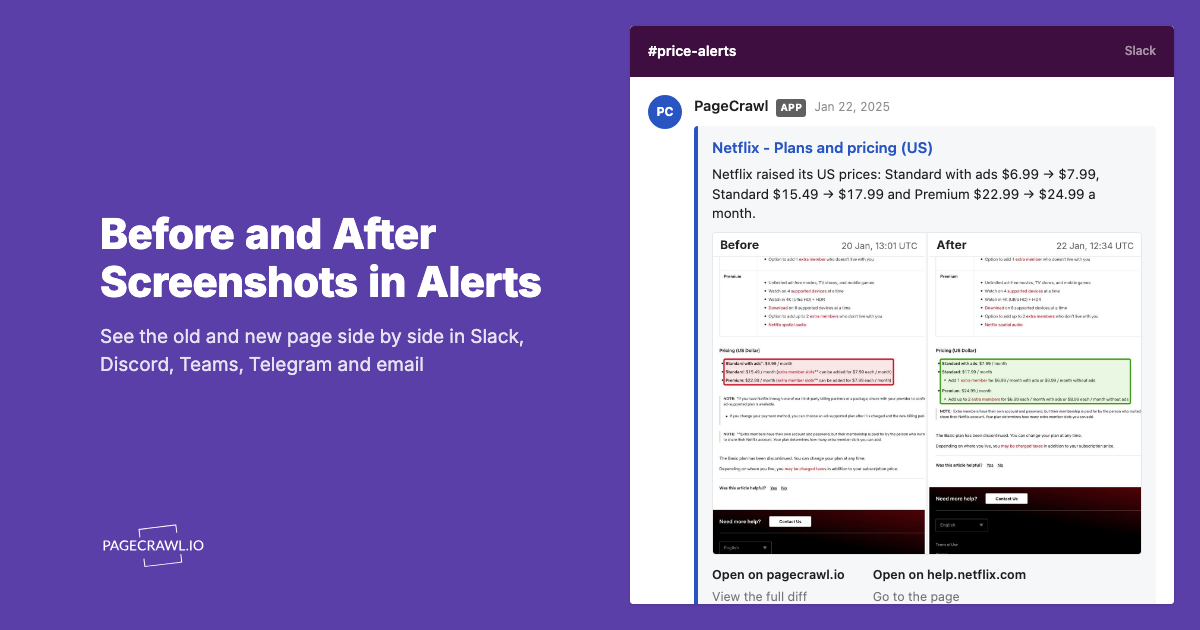
Set alert conditions based on what matters to you. For a product you want to buy, set a target price alert that notifies you when a check finds the price below your threshold. For a competitor's product, set a "price decreases" alert to hear on the next check when they lower their price. For availability tracking, set an alert for when the page text changes from "Sold Out" to "Add to Cart" or similar status changes.
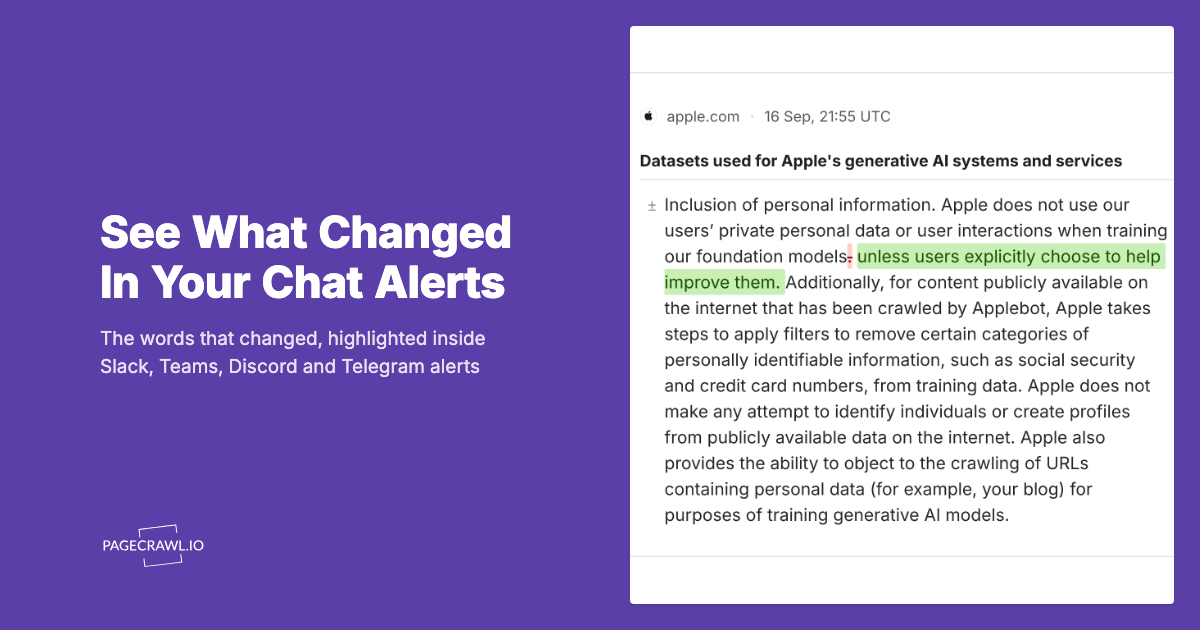
Alerts work with email, Slack, Discord, Teams, Telegram, and webhooks, so you can receive notifications wherever you already work.
Monitoring a Seller's Storefront
To watch a competitor's entire catalog, add their TikTok Shop seller storefront URL as a monitor. Use fullpage mode to track the complete page content. You will receive alerts when new products are added, existing products are removed, or prices change across their catalog.
For more granular tracking, add individual product pages from their storefront. This gives you price history and availability data for each product separately, which is more useful for detailed competitive analysis.
Using CSS Selectors for Specific Data
If you need to track a specific element on a TikTok Shop page, such as the review count, seller rating, or a particular price tier, use CSS selectors to target exactly the data you need. This isolates the value you care about from the rest of the page content, reducing noise in your change alerts.
Tracking Trending and Viral Products
Catching trending products early is one of the most valuable uses of TikTok Shop monitoring. There are several approaches depending on your goals.
Monitor Category Bestseller Pages
TikTok Shop maintains bestseller lists by category. Add the category pages relevant to your business as monitors. When a new product enters the trending list, you receive an alert. This surfaces viral products within hours of them gaining traction, rather than days or weeks later when you happen to notice them on your feed.
Watch Top Sellers in Your Niche
Identify the top 5-10 sellers in your product category and monitor their storefronts. Successful TikTok Shop sellers often list trending products early because they are closer to the supply chain or spot trends through creator partnerships. When a top seller adds a new product, that is a signal worth investigating.
Track Hashtag and Search Result Pages
TikTok Shop search results for relevant keywords show which products are gaining visibility. Monitoring search result pages for terms related to your business reveals new competitors, emerging products, and shifting demand patterns.
Monitoring Competitor TikTok Sellers
Competitive intelligence on TikTok Shop goes beyond price tracking. Here is what to watch and how to use the data.
Price and Promotion Patterns
Track competitor product prices over weeks and months to identify patterns. Many sellers follow predictable promotion cycles tied to TikTok Shop events, payday periods, or seasonal demand. Understanding these cycles lets you time your own promotions to either match competitors or deliberately counter-program against their sales.
For structured competitor price monitoring, add each competitor's key products as individual monitors. Price mode captures the selling price automatically, and PageCrawl's change history shows you exactly when and by how much prices changed.
Catalog Changes
When a competitor adds new products, it signals what they think will sell. When they remove products, it suggests those items underperformed. Monitoring storefront pages catches both additions and removals, giving you a running view of their product strategy.
Rating and Review Velocity
A competitor whose review count is growing quickly has a product gaining traction. A competitor whose average rating is declining may be having quality issues. Both are actionable signals for your own business decisions.
Cross-Platform Price Comparison: TikTok Shop vs Amazon vs Temu
Many products sold on TikTok Shop are also available on Amazon, Temu, AliExpress, and other marketplaces. Prices vary significantly across platforms due to different fee structures, commission models, and competitive dynamics. A product that costs $19.99 on TikTok Shop might be $24.99 on Amazon and $11.99 on Temu.
PageCrawl's product comparison feature lets you track the same product across multiple platforms. Add the product page from each marketplace as its own monitor with price tracking, and view them together in your dashboard to see how prices compare. Automatic grouping that matches the same product across retailers into a single comparison view, with alerts when the cheapest option changes, is a custom capability you can ask us to enable for your account; the help article on comparing product prices across multiple retailers shows what that view looks like.
This is valuable for several use cases:
Consumers: Find the lowest price for a product you want, regardless of which platform it is on. Set alerts to be notified when any platform drops to your target price.
Sellers: Understand how your TikTok Shop pricing compares to the same product on Amazon and other marketplaces. If a competitor on Amazon undercuts your TikTok Shop price, you may be losing customers who comparison shop.
Sourcing teams: If you source products from Temu or AliExpress to resell on TikTok Shop, monitoring sourcing costs across platforms helps you maintain margins and switch suppliers when better pricing appears.
For a comprehensive view of ecommerce monitoring tools and how they compare for multi-platform tracking, see our detailed comparison guide.
Common Monitoring Scenarios
Tracking a Specific Product You Want to Buy
Add the TikTok Shop product URL, set price tracking mode, and configure a target price alert. PageCrawl checks the price on your schedule and notifies you when it drops below your target. You can also set availability alerts for sold-out products so you hear as soon as a check detects the restock.
Watching a Competitor's Pricing Strategy
Add 10-20 of a competitor's key products as individual monitors. Review the price history weekly to understand their pricing patterns. Set alerts for price decreases greater than 10% to catch significant promotions as they happen rather than discovering them after the fact.
Spotting Trending Products Early
Monitor 3-5 TikTok Shop category pages or bestseller lists. When a new product appears in the trending results, investigate it as a potential opportunity. Combine this with storefront monitoring of top sellers to see what products they are adding.
Monitoring Your Own Listings
If you sell on TikTok Shop, monitor your own product pages to verify that prices display correctly, that products remain in stock as expected, and that the information shown to buyers matches what you have configured. Pricing errors and accidental stockouts are easier to catch with automated monitoring than with manual checks.
Choosing your PageCrawl plan
PageCrawl's Free plan lets you monitor 6 pages with 220 checks per month, which is enough to validate the approach on your most critical pages. Most teams graduate to a paid plan once they see the value.
| Plan | Price | Pages | Checks / month | Frequency |
|---|---|---|---|---|
| Free | $0 | 6 | 220 | every 60 min |
| Standard | $8/mo or $80/yr | 100 | 15,000 | every 15 min |
| Enterprise | $30/mo or $300/yr | 500 | 100,000 | every 5 min |
| Ultimate | $99/mo or $999/yr | 1,000 | 100,000 | every 2 min |
Annual billing saves two months across every paid tier. Enterprise and Ultimate scale up to 100x if you need thousands of pages or multi-team access.
Standard at $80/year covers 100 product pages. On TikTok Shop, where flash deal discounts run deep and competitor prices can drop without warning, catching a single meaningful price change or restock across your tracked SKUs covers the annual cost many times over. Enterprise at $300/year handles 500 pages and 5-minute checks, which is the right scale for sellers actively managing catalog pricing across dozens of competitors and multiple marketplaces.
Getting Started
PageCrawl's free tier includes 6 monitors, which is enough to track a handful of TikTok Shop products or a few competitor storefronts. Start with the products or sellers that matter most to your business or shopping goals.
For broader monitoring across dozens of products, multiple competitors, and cross-platform comparison, paid plans start at $8/month for 100 pages and $30/month for 500 pages. Every plan includes price tracking, availability alerts, email notifications, and full change history.
Add your first TikTok Shop product URL, set up a price alert, and let PageCrawl do the checking for you. Whether you are tracking a single viral product or running competitive intelligence across the platform, automated monitoring saves hours of manual work and catches changes you would otherwise miss.