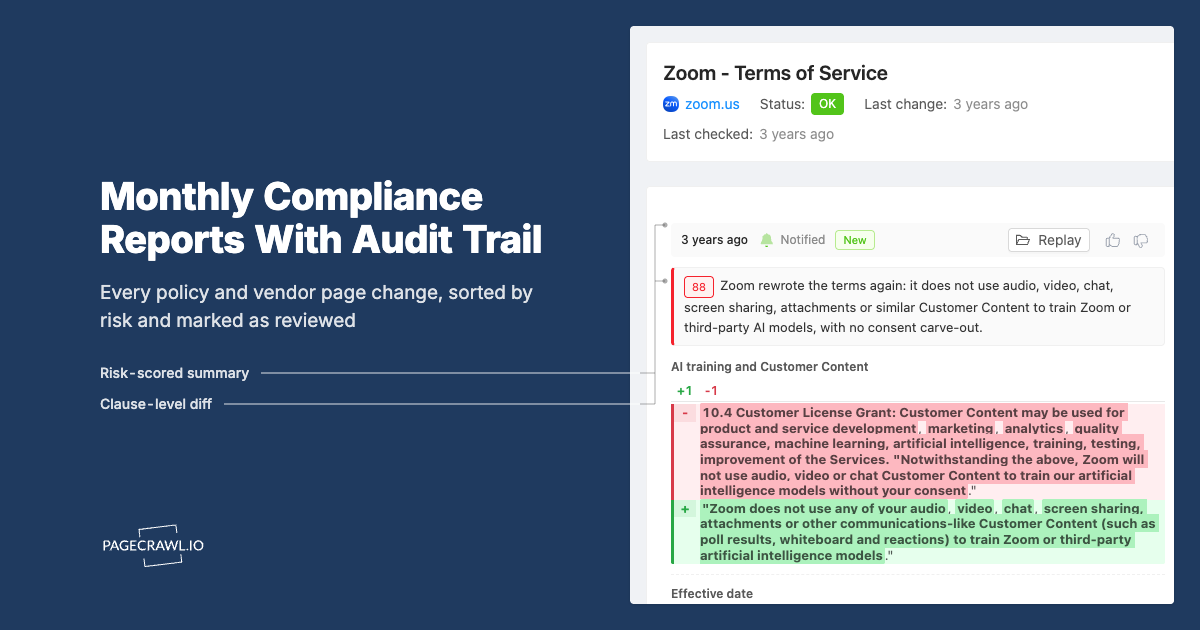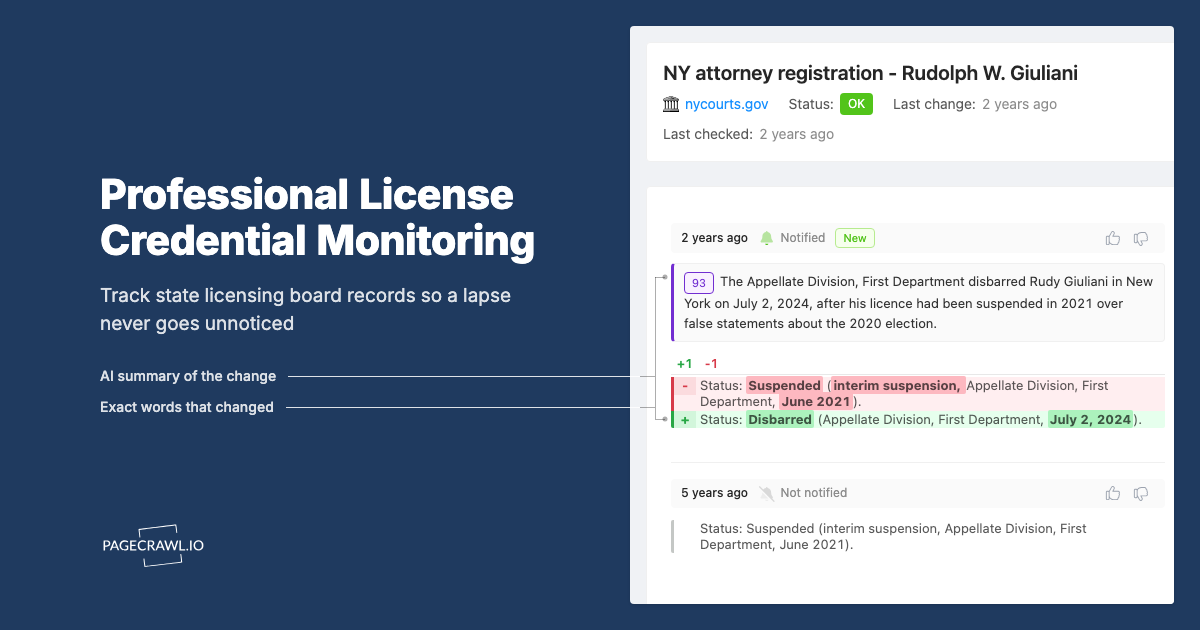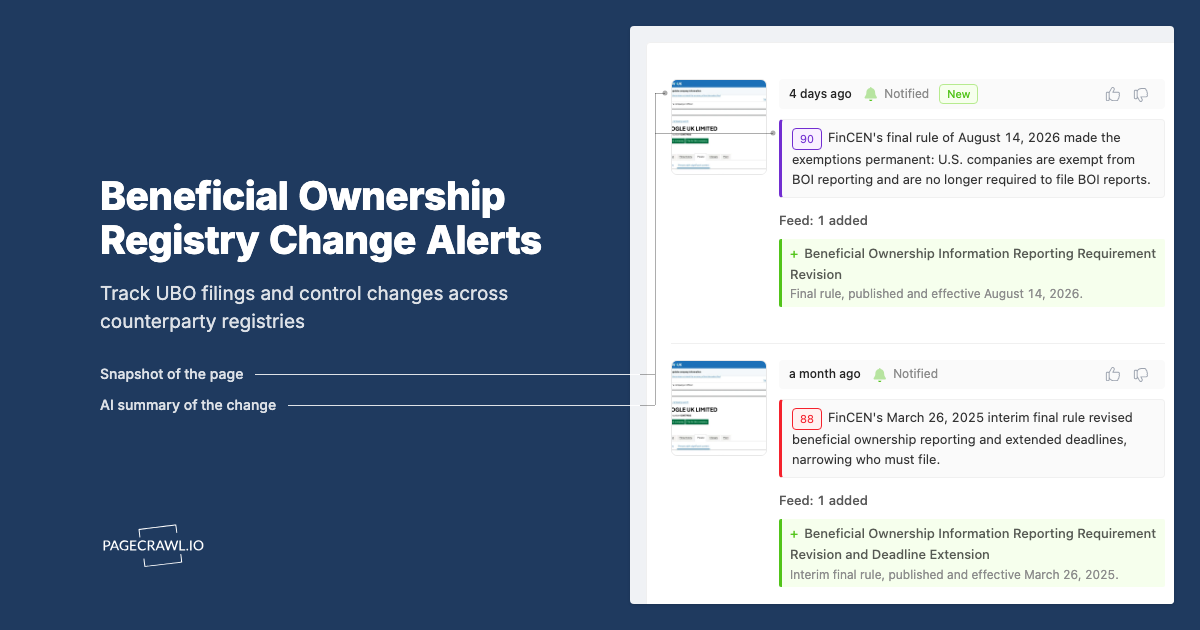
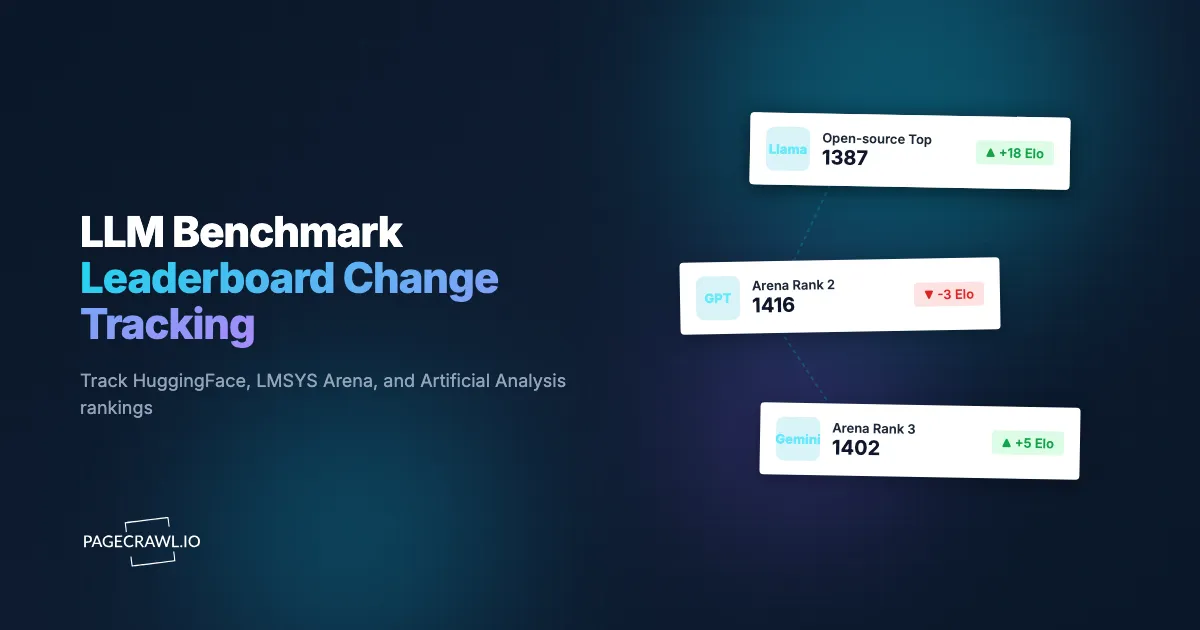
When a new frontier model climbed near the top of LMSYS Chatbot Arena in mid-2024, the rank shift was visible to anyone watching the leaderboard while most teams were still reading the vendor's announcement. ML engineers evaluating model choices for new features saw the score, decided to run their own evals, and had a working prototype before the rest of the industry processed the news. By the time the model was on most teams' radar, the lead users were already several iterations into integration.
Public LLM leaderboards have become the de facto reference for model selection. LMSYS Chatbot Arena, the HuggingFace Open LLM Leaderboard, Artificial Analysis, SEAL evals, MMLU-Pro, and the various coding-specific benchmarks (HumanEval+, LiveCodeBench, Aider) all update continuously as new models are submitted and re-evaluated. For ML engineers, AI product teams, investors, and analysts, same-day awareness of new leaders or notable rank changes informs procurement, architecture, and competitive intelligence decisions. The leaderboards themselves do not push notifications. They update silently.
This guide covers how the major LLM leaderboards publish data, what to watch, and how to set up a continuous monitor that surfaces rank changes and new model entries within hours.
Quick Setup
Pick the leaderboards you follow and preview a rank-change diff for the top of the table.
Why should you monitor LLM leaderboards?
Because leaderboards move faster than vendor announcements and they never push a notification. A new top score can appear on Arena before the model gets a formal product page, and community-evaluated rank is the closest public proxy for real-world capability, which is what model selection, routing, and procurement decisions actually depend on.
New Top Entrants Signal Real Capability
When a new model debuts at or near the top of LMSYS Arena or the HuggingFace leaderboard, the signal is much stronger than a vendor's own benchmarks. Community-evaluated rank is the closest available approximation to real-world capability.
Open-Source Model Gains Affect Self-Hosting Decisions
When an open-source model reaches parity with a closed-source counterpart, the cost-quality calculation for self-hosting shifts immediately. Same-day awareness lets teams running their own inference pipelines pick up the new model before competitors.
Vertical-Specific Benchmarks Inform Task Selection
Coding, math, reasoning, and long-context benchmarks each measure different capabilities. A model that ranks #5 on Arena but #1 on Aider's coding benchmark may be the right choice for a code-generation product even if it isn't the top general-purpose model.
Provider Score Changes Often Signal Silent Updates
Providers occasionally update models in place (gpt-4o, claude-3-5-sonnet) without changing the API name. Leaderboard score changes for a "named" model often reflect these silent updates, which are worth knowing about for production routing decisions.
Benchmark Methodology Updates
Leaderboards occasionally adjust their methodology (new categories, weighting changes, new evaluation criteria). These changes affect cross-model comparisons and are worth tracking as methodology context, not just rank data.
How are LLM leaderboards published?
Each major leaderboard publishes a single public URL carrying a ranked table, rendered client-side and updated as new submissions are evaluated. There is no feed and no notification: the table simply changes. These are the pages worth watching:
https://lmarena.ai/leaderboard
https://huggingface.co/spaces/open-llm-leaderboard/open_llm_leaderboard
https://artificialanalysis.ai/leaderboards/models
https://livecodebench.github.io/leaderboard.html
https://aider.chat/docs/leaderboards/
https://www.scale.com/leaderboard
https://klu.ai/leaderboards
Each page renders the current rankings in a sortable table. Most update continuously as new submissions are evaluated; some, such as the Open LLM Leaderboard hosted on HuggingFace, batch updates on a weekly cadence, while Artificial Analysis refreshes its cost-quality view on its own schedule. The rendered tables are JavaScript-heavy on most leaderboards, so PageCrawl's full-page text capture (which renders the page before capture) is the right setup.
Comparing Monitoring Approaches
| Approach | Cost | Latency | Coverage | Best For |
|---|---|---|---|---|
| Manual leaderboard refresh | Free | Variable | Per-page effort | Casual interest |
| Twitter/X following AI researchers | Free | Variable | Crowd-sourced | Community-driven discovery |
| Artificial Analysis newsletter | Free | Weekly | One leaderboard | Awareness |
| Custom RSS scrapers | Free + engineering | Variable | Custom | Teams with engineering capacity |
| PageCrawl on leaderboards | Free tier to $80/year | Hours | Configurable per leaderboard | AI engineering, product, investor research |
For teams that want a single source for AI benchmark monitoring, PageCrawl gives you per-leaderboard diff alerts into the same channel as your other monitoring (provider pricing, API changelogs). The integrated view is the workflow value.
Setting Up LLM Leaderboard Monitoring in PageCrawl

Step 1: Pick the leaderboards that matter for your work
Different teams care about different leaderboards. Product teams often prioritize Arena (general capability), engineers care about Aider and LiveCodeBench (coding), researchers track HuggingFace Open LLM, and product strategists watch Artificial Analysis. Pick the 3-5 that match your work.
Step 2: Add each leaderboard URL as a content monitor
Paste each URL into PageCrawl. The rendered table is captured as page content. New entries and rank shifts produce diffs.
Step 3: Use content monitoring with full-page text
Most leaderboards render client-side. Full-page text mode (PageCrawl's default for JavaScript-heavy pages) captures the rendered table after script execution. If a table still comes back empty, the help centre covers picking the right engine in real browser monitoring and engine selection.
Step 4: Daily checks
Leaderboard updates typically lag actual model releases by hours or days. Daily checks capture most rank movement. For very high-velocity periods (around major model launches), hourly checks may catch shifts faster.
Step 5: Configure AI summaries
PageCrawl's AI summaries describe rank changes in plain language: "New entry: model-x-large debuts at rank 3 (coding benchmark); model-y dropped from #2 to #4 after re-evaluation." This converts a noisy table diff into a focused alert. See AI-powered change detection and smart filtering for how to enable it and tune what it reports.
Step 6: Route to AI engineering and product channels
A #llm-benchmarks Slack channel that receives daily summaries supports both engineering and product team awareness. For investor and competitive intelligence use cases, a separate channel may be appropriate.
Worked Example: An AI Product-Team Setup
Take an AI product team building a code-generation feature. The setup:
- Identify 5 relevant leaderboards: LMSYS Arena (general), HuggingFace (open-source ranking), Aider (coding), LiveCodeBench (coding), Artificial Analysis (cost-quality view).
- Add 5 PageCrawl monitors with daily checks.
- Route alerts to
#llm-benchmarksSlack channel. - Pair with our AI provider pricing monitor so price-quality trade-offs become visible together.
- Pair with our SaaS API deprecation monitor for the AI providers in production.
Total cost: Free plan covers 5 monitors at daily checks (within the 6-monitor cap). For a team where model selection materially affects product quality and cost, this is a free intelligence flow.
Patterns Worth Watching For
New models entering the top 10. The highest-value signal. New top-10 entries often represent meaningful capability shifts worth evaluating for production use.
Open-source models reaching parity with closed-source counterparts. Materially changes self-hosting economics.
Vertical-specific benchmark winners for coding, math, reasoning, long-context. Different from the general-purpose ranking and often more relevant for specific product use cases.
Provider score changes for already-named models. May signal silent in-place updates that affect production routing.
Rank reshuffles across leaderboards. A model that gains on Arena but drops on a vertical-specific benchmark tells a more nuanced capability story than rank in any single leaderboard.
Methodology changes. Leaderboards occasionally update scoring criteria; relevant context for cross-leaderboard comparisons.
New leaderboard launches. New benchmarks (e.g. SWE-bench Verified, GAIA) sometimes become important quickly. Worth adding to the monitor set when they gain traction.
Combining Leaderboard Monitoring With Other Signals
The full value of leaderboard monitoring shows up when you pair it with other AI-ecosystem data.
Combine with AI provider pricing. Pair the leaderboard monitor with our AI provider pricing monitor. A model with a new top score plus a per-token rate cut is a clean signal for production migration.
Combine with SaaS API deprecation. Use our SaaS API deprecation monitor for the AI providers in production. Model deprecation timelines often follow new releases.
Combine with GitHub trending. Our GitHub trending monitor surfaces new AI tooling that often correlates with model adoption cycles.
Combine with cloud pricing changes. Our AWS and GCP pricing monitor covers the infrastructure layer for self-hosting decisions tied to open-source model adoption.
Who uses LLM leaderboard monitoring?
AI engineers choosing and routing production models, product managers deciding what a capability jump unlocks, investors tracking lab competitive dynamics, ML researchers, consultancies advising on model selection, and procurement or FinOps teams weighing cost against quality.
AI engineering. Model selection decisions are informed by current benchmark standing. Production model routing benefits from same-day awareness of capability shifts.
AI product management. Capability monitoring drives feature roadmap and procurement decisions. A new top model can unlock features that were previously below quality threshold.
Investor research. Public AI lab competitive dynamics show up on leaderboards. Same-day awareness supports faster thesis adjustment.
ML research. Real-time awareness of leaderboard movement supports reproduction work and citation. Researchers building new evaluations benefit from understanding the current landscape, and pair leaderboard alerts with preprint server and journal monitoring for the papers behind each score.
AI consultancies. Client model-selection recommendations stay current. The leaderboard archive is a useful longitudinal dataset for trend analysis.
Procurement and FinOps. Combined with pricing monitoring, leaderboard data supports cost-quality trade-off analysis for enterprise AI spend.
Frequently Asked Questions
How often do leaderboards actually update? LMSYS Arena updates continuously as votes accumulate. HuggingFace Open LLM batches updates roughly weekly. Vertical leaderboards vary. Daily monitoring catches most movement.
Will I get noise from minor rank shifts? Rank shifts of one or two positions in the middle of the table are common and often not actionable. AI summaries help filter to substantive changes (new entries, top-10 shifts, methodology updates).
Can I monitor only specific models? PageCrawl alerts on any page change. For per-model precision, you can monitor narrower CSS selectors that target only the model rows you care about, though most teams find page-level alerts with AI summaries adequate.
What about vendor-published benchmarks? Vendor-published benchmark pages (OpenAI's evals page, Anthropic's model-card pages) can be monitored the same way. They are useful for catching vendor-claimed capability changes between leaderboard updates.
Do I need a paid plan? The Free plan supports 6 monitors at daily checks, enough for the major leaderboards. Standard at $80/year covers a more extensive set including vertical-specific benchmarks and vendor-published evaluation pages.
How do leaderboards handle model retirement? Most leaderboards retain historical scores for retired models. The archive is useful for trend analysis but not for current model selection.
Choosing your PageCrawl plan
PageCrawl's Free plan lets you monitor 6 pages with 220 checks per month, which is enough to validate the approach on your most critical pages. Most teams graduate to a paid plan once they see the value.
| Plan | Price | Pages | Checks / month | Frequency |
|---|---|---|---|---|
| Free | $0 | 6 | 220 | every 60 min |
| Standard | $8/mo or $80/yr | 100 | 15,000 | every 15 min |
| Enterprise | $30/mo or $300/yr | 500 | 100,000 | every 5 min |
| Ultimate | $99/mo or $999/yr | 1,000 | 100,000 | every 2 min |
Annual billing saves two months across every paid tier. Enterprise and Ultimate scale up to 100x if you need thousands of pages or multi-team access.
At an engineering hourly rate, Standard at $80/year pays for itself the first time you catch a breaking API change, a deprecated endpoint, or a silent config change before it takes down production. 100 monitored pages is enough to cover the changelogs and API documentation of every third-party service your stack depends on. Enterprise at $300/year adds 5-minute checks and 500 pages. All plans include the PageCrawl MCP Server, which plugs directly into Claude, Cursor, and other MCP-compatible tools. Developers can ask "what changed in the Stripe API docs this month?" and get a summary pulled from your own monitoring history. AI assistants can create monitors through conversation on every plan, including Free, turning your tracked pages into a living knowledge base instead of a pile of alert emails.
Getting Started
Add the LMSYS, HuggingFace, and Artificial Analysis leaderboards to PageCrawl on a daily check. Create a free account and rank changes will arrive in your channel each day.
Once basic coverage is in place, add the vertical leaderboards relevant to your product (coding, math, long-context) and pair with AI provider pricing monitors. The Standard plan at $80/year covers a serious AI-engineering setup with room for additional vendor and benchmark pages. For teams where model selection materially affects product quality, this is one of the highest-leverage intelligence flows available.