A product manager at a mid-stage SaaS company discovers that a competitor hired 14 machine learning engineers in the last quarter. She did not learn this from a confidential source. She found it by checking LinkedIn job postings. Two months later, the competitor announces an AI feature that directly threatens her product's core differentiation. The product manager had a two-month head start to respond, but only because she was systematically watching publicly available signals.
Competitive intelligence is not about secrets. It is about attention. The vast majority of useful competitive data is publicly available, sitting in plain sight across dozens of sources. The companies that build genuine competitive advantages do not have access to better information. They have better systems for collecting, organizing, and acting on the information that anyone could find.
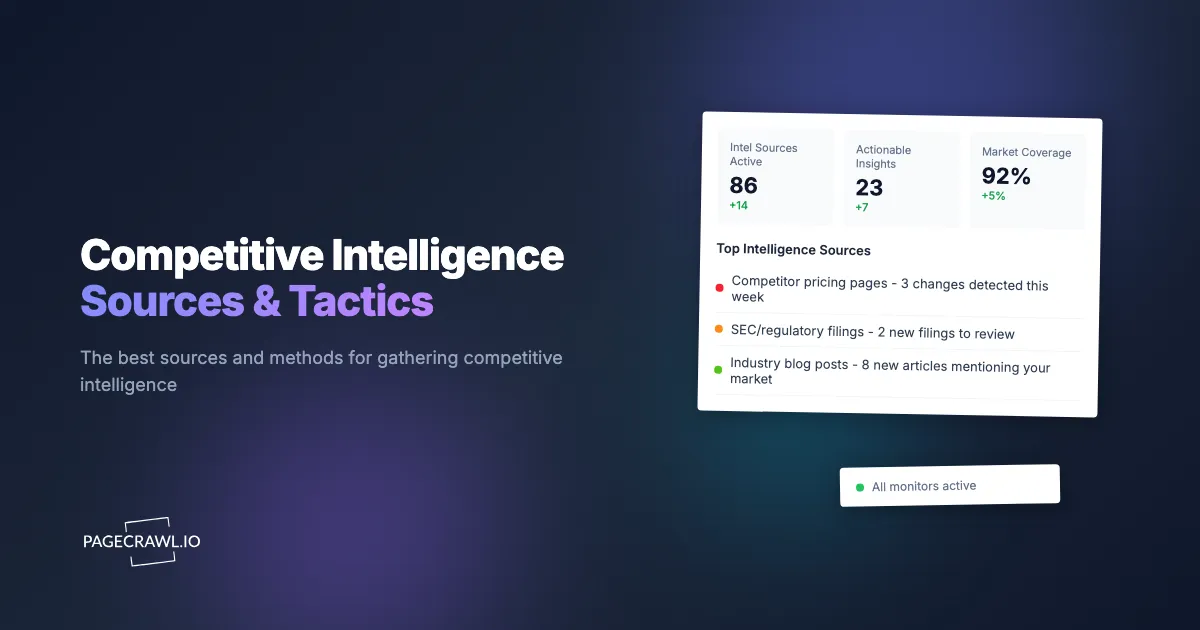
This guide covers 25 specific, legal tactics for gathering competitive intelligence, organized by source category. Each tactic includes what to look for, how to access it, and how to turn raw data into actionable insight. For a foundational overview of competitive intelligence as a discipline, see the complete guide to competitive intelligence.
Where is the legal line in competitive intelligence?
Collecting any information a competitor makes publicly available, or that people share voluntarily, is legal. Deception, unauthorized system access, and inducing someone to break a confidentiality obligation are not. Before diving into tactics, that line needs to be clear.
What Is Legal
- Reviewing any publicly accessible website, social media profile, or public document
- Attending public events, trade shows, and conferences
- Reading public financial filings, patent applications, and court records
- Analyzing publicly available job postings
- Monitoring public pricing pages, product documentation, and marketing materials
- Talking to customers, prospects, and industry analysts who share their opinions voluntarily
- Using web monitoring tools to track changes to public pages
What Is Not Legal
- Accessing systems without authorization (hacking, credential theft)
- Misrepresenting your identity to obtain confidential information
- Inducing employees or partners to violate NDAs or confidentiality agreements
- Stealing trade secrets through any means
- Wiretapping, eavesdropping, or intercepting private communications
- Bribing employees for inside information
The line is straightforward: if the information is publicly available or voluntarily shared, collecting it is legal. If obtaining it requires deception, unauthorized access, or inducing someone to break a legal obligation, it is not. Rules vary by jurisdiction and industry, so treat this article as informational, not legal advice, and consult counsel for specific situations.
Digital Presence Sources
The richest source of competitive intelligence is what competitors publish themselves.
1. Website Content Monitoring
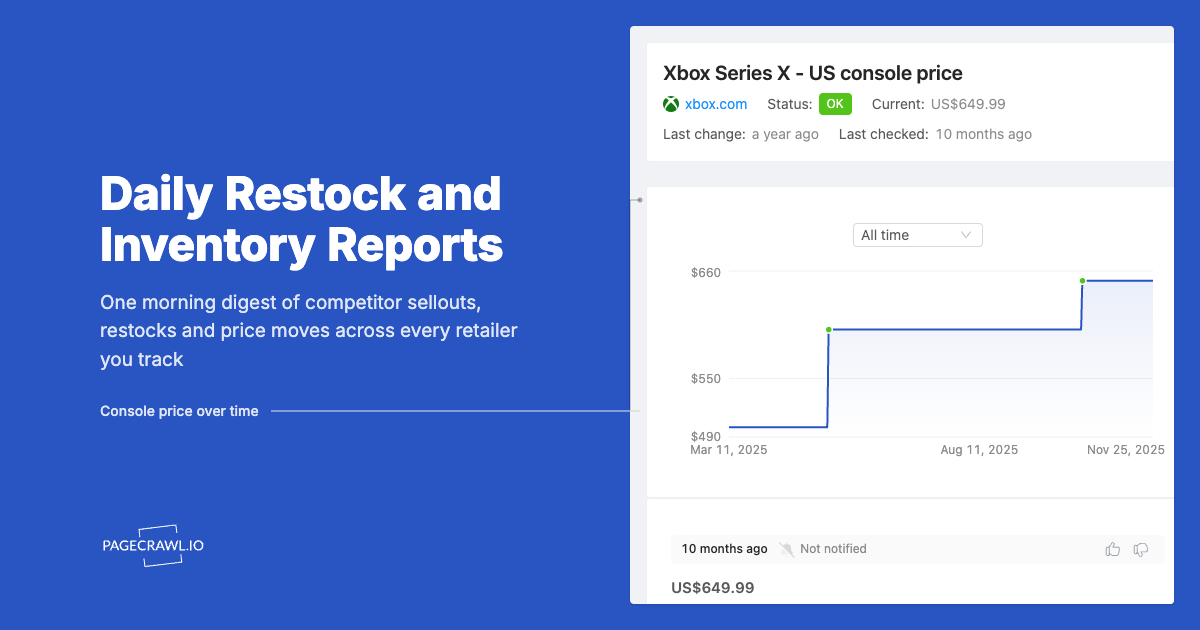
Competitor websites are the single most valuable intelligence source. Product pages describe capabilities. Pricing pages reveal strategy. Landing pages show positioning. Blog posts signal content strategy. Career pages indicate growth areas.
What to watch: homepage messaging changes, new product pages, pricing adjustments, feature comparison updates, case study additions, partner page changes, and navigation restructuring.
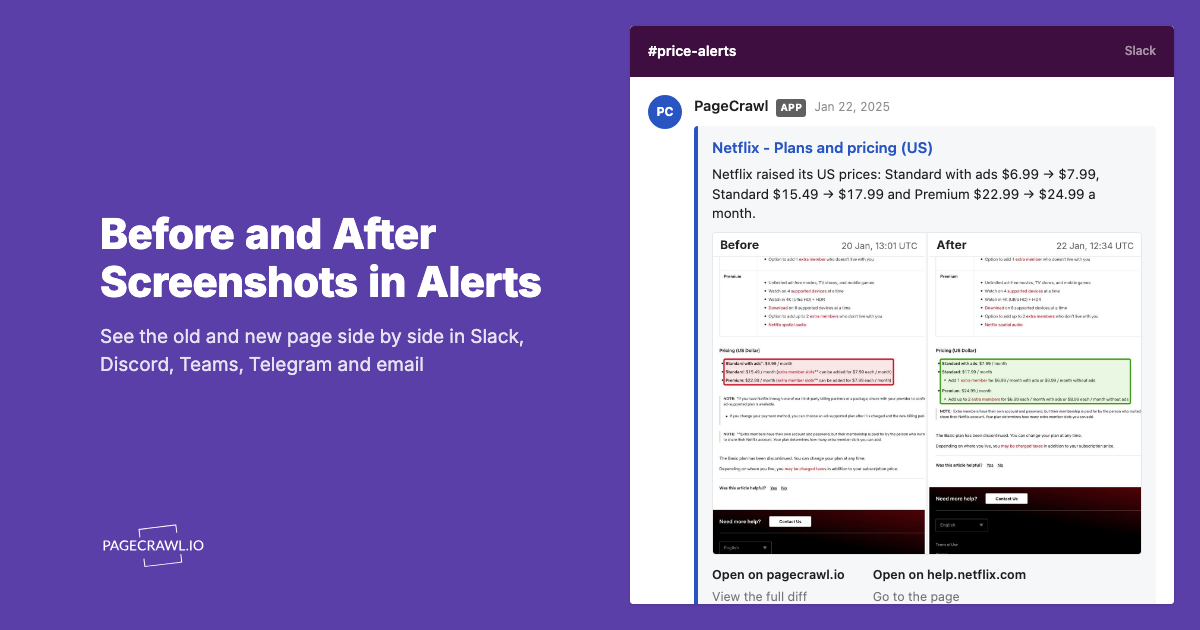
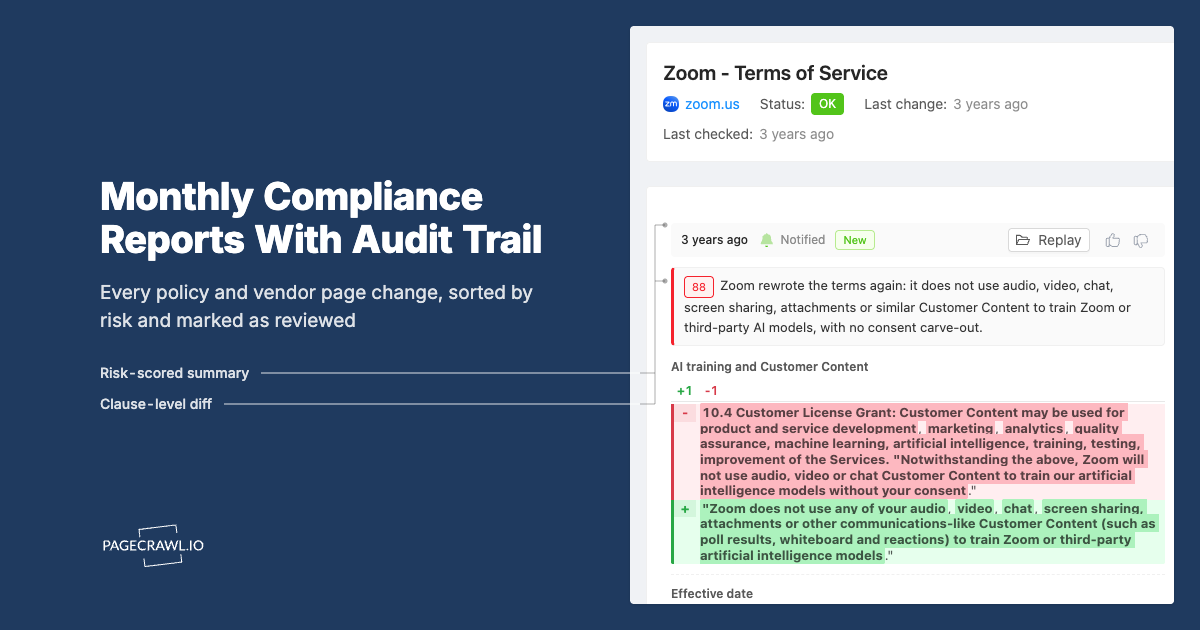
How to do it: Set up automated monitoring with PageCrawl on key competitor pages. Full page monitoring catches all text changes. Screenshot monitoring captures visual changes. AI-powered summaries explain what changed and why it matters.
For a detailed walkthrough of tracking competitor websites, including which pages to prioritize and how to organize monitoring, see the dedicated guide.
2. Blog and Content Strategy Analysis
Competitor blogs reveal long-term strategic intent. Blog posts require planning, writing, review, and publication. A new content cluster targeting specific keywords signals a deliberate strategic investment, not a random tactical decision.
What to watch: new topic clusters (a competitor publishing five posts about "data governance" signals a push into that market), SEO-targeted content (titles optimized for keywords you are also targeting), thought leadership shifts, customer story themes, and content velocity changes.
How to do it: Monitor the competitor's blog index page or RSS feed. PageCrawl detects new posts as page changes. For RSS-based monitoring, see the RSS feed monitoring guide.
3. Social Media Monitoring
Social media accounts reveal real-time marketing strategy, customer engagement approach, and brand positioning.
What to watch: messaging tone changes, campaign launches, customer complaints and responses, new product teasers, executive thought leadership, and engagement patterns.
How to do it: Monitor competitor social profiles. LinkedIn company pages are particularly valuable for B2B intelligence because they show employee count growth, content engagement, and job postings. For LinkedIn-specific strategies, see the LinkedIn monitoring guide.
4. Review and Rating Site Monitoring
Customer reviews on G2, Capterra, Trustpilot, and similar sites provide unfiltered competitive intelligence, and they are the raw material for brand and reputation monitoring. Reviews reveal product weaknesses, feature gaps, customer service issues, and the reasons customers choose one product over another.
What to watch: new negative reviews (reveal product issues), new positive reviews (reveal what is working), star rating changes, review response patterns (reveal customer service approach), and comparison reviews that mention your product.
How to do it: Monitor competitor review pages for new reviews. Watch for review volume changes that might indicate incentivized review campaigns or emerging customer dissatisfaction. PageCrawl's monitoring works well with review platforms like G2, Capterra, and Trustpilot, letting you track review boards for new entries and rating changes. Set up full page monitors on a competitor's review profile and get alerted when new reviews appear or overall ratings shift.
For a broader look at monitoring brand perception, see the online reputation monitoring guide.
5. Job Posting Analysis
Job postings reveal where a competitor is investing. Engineering roles in a new technology stack signal a product pivot. Sales roles in a new geography signal market expansion. A sudden burst of hiring indicates growth investment. A hiring freeze indicates financial pressure.
What to watch: new roles (especially leadership positions), technology requirements in engineering postings, geographic focus, department headcount changes, role descriptions that hint at unreleased products or features.
How to do it: Monitor the competitor's careers page with PageCrawl. Check LinkedIn job postings regularly. Set up alerts on job boards like Indeed, Glassdoor, and industry-specific boards.
6. Developer and Technical Documentation
For technology companies, developer documentation reveals product architecture, API capabilities, integration limitations, and upcoming features. Documentation changes often precede marketing announcements.
What to watch: new API endpoints, deprecated features, new integration guides, beta feature documentation, changelog updates, and migration guides (which signal breaking changes).
How to do it: Monitor documentation landing pages and changelogs. For GitHub-hosted documentation or open-source projects, see the guide on monitoring GitHub releases and documentation.
7. SEO and Search Strategy Analysis
How competitors rank in search results reveals their content strategy priorities and market positioning.
What to watch: new pages ranking for your target keywords, changes in keyword focus, new landing pages targeting specific search terms, featured snippet strategies, and domain authority changes.
How to do it: Use SEO monitoring tools to track competitor rankings and content changes. Monitor competitor sitemaps for new pages being indexed.
Financial and Legal Sources
Public financial and legal documents provide intelligence that competitors would rather not publicize.
8. SEC Filings and Annual Reports
For publicly traded competitors, SEC filings are a goldmine. 10-K annual reports, 10-Q quarterly reports, and 8-K current reports contain revenue breakdowns, customer metrics, risk disclosures, strategic priorities, and competitive landscape assessments.
What to watch: revenue growth rates, customer count and retention metrics, segment revenue breakdowns, management discussion sections (where executives explain strategy), risk factor changes, and acquisition activity.
How to do it: Monitor SEC EDGAR pages for new filings. The SEC filings monitoring guide covers setup in detail. For private companies, look for disclosed information in partner SEC filings.
9. Patent and Trademark Filings
Patent applications reveal R&D direction months or years before product launches. A competitor filing patents in a new technology area signals future product development.
What to watch: new patent applications (published 18 months after filing), patent grants, trademark filings (which often precede new product or feature launches), and the specific technology areas covered.
How to do it: Monitor the USPTO patent and trademark databases. Google Patents provides searchable access. Set up monitoring on competitor-specific search result pages to catch new filings.
10. Court Filings and Legal Actions
Lawsuits, regulatory actions, and court filings reveal competitive conflicts, IP disputes, and compliance issues, which makes court docket and enforcement monitoring a standing source rather than an occasional search.
What to watch: patent infringement lawsuits (reveal competitive overlap), employment lawsuits (may reveal internal culture issues), regulatory investigations, contract disputes with customers or partners, and antitrust actions.
How to do it: Monitor PACER (Public Access to Court Electronic Records) for federal cases. State court databases cover state-level actions. Industry news often covers significant legal developments.
11. Government Contracts
For competitors that sell to government agencies, contract data is public. Federal contract awards, proposals, and modifications reveal pricing, capabilities, and customer relationships.
What to watch: new contract awards, contract values (reveal pricing), agencies served (reveal target markets), subcontractor relationships, and contract modifications (which signal expanding or shrinking engagements).
How to do it: Monitor SAM.gov and USAspending.gov for federal contracts. For detailed setup, see the government contract monitoring guide. State and local government procurement sites provide similar data at regional levels.
Human Intelligence Sources
Conversations and observations from real people provide context that documents alone cannot.
12. Trade Show and Conference Intelligence
Industry events are concentrated intelligence opportunities. Competitor booth presentations, keynote speeches, panel discussions, and casual conversations reveal strategy, product direction, and market positioning.
What to watch: booth messaging and demos (reveal current positioning), presentation topics (reveal strategic priorities), new product announcements, partnership reveals, and the customers who visit competitor booths.
How to collect: Attend key industry events. Assign specific team members to attend competitor sessions. Take detailed notes on messaging, demos, and audience questions. Follow up on any public materials shared during presentations.
13. Customer and Prospect Conversations
Your own customers and prospects interact with competitors. The intelligence they share voluntarily during sales calls, support interactions, and account reviews is extremely valuable.
What to watch: competitive mentions during sales calls (why prospects are also evaluating a competitor), win/loss reasons, feature comparisons prospects make, pricing references, and customer service comparisons.
How to collect: Train sales teams to capture competitive mentions systematically. Conduct win/loss analyses for significant deals. Ask customers directly about their experience evaluating alternatives. Build competitive data into CRM fields and sales battlecards.
14. Industry Analyst Relationships
Analysts at firms like Gartner, Forrester, IDC, and industry-specific research firms evaluate competitors professionally. Their published reports, market maps, and vendor assessments provide structured competitive analysis.
What to watch: analyst report rankings, vendor assessment changes, market forecast shifts, emerging category definitions, and analyst commentary on competitor strengths and weaknesses.
How to access: Subscribe to relevant analyst services. Attend analyst webinars (many are free). Monitor analyst social media accounts for commentary. Engage with analysts directly to provide your perspective and receive theirs.
15. Supplier and Partner Intelligence
Shared suppliers and partners sometimes provide competitive signals. A supplier mentioning that a competitor doubled their order volume reveals growth. A partner announcing an integration reveals strategic direction.
What to watch: shared supplier relationships, partner ecosystem announcements, integration marketplace changes, and supplier industry events where competitor activity is discussed.
How to collect: Maintain relationships with shared suppliers and partners. Attend partner ecosystem events. Monitor partner and integration marketplace pages.
16. Former Employee Insights (Within Legal Bounds)
Hiring former competitor employees is common and legal. The knowledge they bring about general market conditions, publicly known strategies, and industry practices is legitimate intelligence. Asking about trade secrets, proprietary processes, or confidential information is not.
What to watch: general strategic direction, organizational culture, market priorities, and publicly available information that the former employee can contextualize.
How to handle: Respect NDAs and non-compete agreements. Focus on general knowledge rather than proprietary information. Consult legal counsel if uncertain about boundaries.
Public Records and Data Sources
Government databases and public records contain structured competitor data.
17. Corporate Registry Filings
State corporate registries contain incorporation documents, annual reports, officer lists, and registered agent information. These reveal corporate structure, subsidiary relationships, and key personnel.
What to watch: new entity filings (may indicate new business units or subsidiaries), officer changes, registered agent changes, and corporate status updates.
How to access: Search the secretary of state website in the competitor's state of incorporation. Many states offer online search tools. Annual reports filed with the state (different from SEC annual reports) sometimes include revenue or employee count data.
18. Import/Export Records
For companies that ship physical goods, import/export records reveal supply chain details, product volumes, and international market activity.
What to watch: shipment volumes (growth or decline), origin countries (supply chain diversification), product descriptions, and frequency changes.
How to access: Services like ImportGenius, Panjiva, and the USITC DataWeb provide searchable import/export data. Some data is available directly through government databases.
19. Property and Real Estate Records
Competitor office leases, property purchases, and building permits reveal expansion plans, consolidation, and geographic strategy.
What to watch: new office leases (market expansion), lease terminations (market exit or consolidation), building permits for expansion, and co-location with other companies.
How to access: County assessor and recorder offices maintain public property records. Commercial real estate databases and news often cover significant lease transactions.
20. Regulatory Filings
Industry-specific regulatory bodies require filings that contain competitive data. FCC filings reveal telecom products. FDA filings reveal pharmaceutical and medical device developments. FERC filings reveal energy market data.
What to watch: new product filings, approval changes, compliance actions, and regulatory correspondence.
How to access: Monitor relevant agency databases directly. Many agencies publish filings searchable by company name.
Industry and Market Sources
Industry-level sources provide competitive context and market dynamics.
21. Industry Association Publications
Trade associations publish market data, trend reports, and member directories that contain competitive information.
What to watch: market size and growth data, industry trend reports, member company rankings, awards and recognition (which companies are being highlighted), and conference speaker selections.
How to access: Join relevant industry associations. Subscribe to their publications. Attend their events.
22. Academic and Research Publications
Academic research sometimes studies specific companies or competitive dynamics in specific markets.
What to watch: case studies featuring competitors, market structure analyses, technology trend papers, and innovation research.
How to access: Google Scholar, SSRN, and university library databases. Industry-specific academic journals.
23. News Monitoring
News coverage provides real-time competitive intelligence: funding announcements, executive changes, product launches, partnership deals, and crisis events.
What to watch: funding rounds (reveal investor confidence and runway), executive hires and departures, product announcement coverage, acquisition rumors, and crisis coverage.
How to do it: Set up Google Alerts for competitor names. Monitor industry news sites with PageCrawl for mentions and new articles.
24. Conference Presentation Archives
Many conferences publish presentation slides, recordings, and summaries after the event, and a deck posted at a stable URL can be watched directly with PowerPoint file change tracking. Even if you could not attend, this content is often freely available.
What to watch: competitor presentation topics, case studies shared, technology discussions, product roadmap hints, and customer success stories.
How to access: Monitor conference websites for published content. Many conferences post to YouTube or SlideShare.
25. Community and Forum Monitoring
Developer communities (Stack Overflow, Reddit, Discord servers, GitHub Discussions), customer communities, and industry forums contain unfiltered competitive intelligence.
What to watch: customer complaints, feature requests, product comparisons, migration discussions (customers moving between competitors), and technical limitation discussions.
How to do it: Monitor relevant subreddits, forums, and community sites. Look for threads comparing your product to competitors or discussing competitor limitations.
How do you scale intelligence collection across all these sources?
You scale by automating every digital source and reserving human effort for analysis. Manually checking 25 different source types across multiple competitors does not scale, but automated monitoring turns the collection side from a full-time job into a manageable system.

Prioritize Sources by Industry
Not every source type matters equally for every business. A B2B SaaS company should prioritize website monitoring, job postings, and review sites. A manufacturing company should prioritize patent filings, trade show intelligence, and import/export records. A financial services firm should prioritize regulatory filings, SEC documents, and news monitoring.
Rank the 25 tactics by relevance to your industry and competitive dynamics. Start with the top five and expand as your program matures.
Automate Digital Sources
Every digital source on this list can be monitored automatically with web monitoring tools. This includes:
- Competitor website pages (product, pricing, blog, careers)
- SEC EDGAR filing pages
- Patent database search results
- Government contract award pages
- Review site competitor profiles
- Social media profiles
- Job board listing pages
- News search result pages
- Conference and event pages
- Community and forum pages
PageCrawl monitors these pages and alerts you when content changes. For competitive intelligence, set up a dedicated structure using labels, folders, and workspaces:
- Competitor A: Website, pricing, blog, careers, reviews
- Competitor B: Website, pricing, blog, careers, reviews
- Industry: Analyst pages, news, regulatory, conferences
This organization makes it easy to see which competitors are most active and which source types are generating the most intelligence.
For guidance on building a comprehensive competitive intelligence monitoring system, see the detailed setup guide.
Build Collection Cadence
Different intelligence sources update at different frequencies. Match your monitoring cadence to the source:
- Near real-time: Website changes, pricing pages, product pages (automated checks as often as every few minutes)
- Daily: News, job postings, review sites, social media
- Weekly: Patent databases, regulatory filings, community forums
- Monthly: Financial filings, industry reports, trade association publications
- Quarterly: SEC filings, annual reports, analyst report cycles
- Event-driven: Trade shows, conferences, product launches
Integrate Into Business Processes
Raw intelligence is only valuable when it reaches the right people at the right time.
Route webhook notifications to the appropriate channels:
- Pricing changes: Sales team Slack channel + competitive strategy lead
- Product updates: Product management + engineering leadership
- Job postings: HR + strategic planning
- Financial filings: Finance + executive team
- Marketing changes: Marketing team + content strategists
How do you build a CI collection plan?
A CI collection plan starts from the questions your business needs answered, maps each question to specific sources, assigns ownership, and sets a review cadence. That structure prevents both gaps and waste.
Step 1: Define Key Intelligence Questions
Start with what your business needs to know:
- What are competitors charging and how is that changing?
- What features are competitors building next?
- Which customer segments are competitors targeting?
- How fast are competitors growing?
- Where are competitors expanding geographically?
- What partnerships are competitors forming?
Step 2: Map Questions to Sources
For each question, identify which of the 25 source types can provide answers. Most questions require multiple sources for a complete picture.
"What features are competitors building next?" might be answered by job postings (what they are hiring for), patent filings (what they are inventing), documentation changes (what they are building), and conference presentations (what they are previewing).
Step 3: Assign Collection Responsibility
Even with automated monitoring, someone needs to review intelligence, analyze patterns, and distribute insights. Assign clear ownership for:
- Monitoring system maintenance (ensuring monitors are active and configured correctly)
- Intelligence review and synthesis (reading alerts and extracting meaning)
- Distribution and communication (sharing findings with stakeholders)
- Strategy recommendations (translating intelligence into action)
Step 4: Establish Review Cadence
Weekly: Review all automated alerts and flag significant developments.
Monthly: Synthesize intelligence into a competitive landscape update. Identify trends across competitors and sources.
Quarterly: Conduct deep-dive competitive analysis. Assess whether collection priorities need adjustment. Brief executive team on competitive dynamics.
Common Challenges
Information Overload
Monitoring 25 source types across multiple competitors generates a lot of data. The solution is not to monitor less but to filter and prioritize better. Use AI-powered change summaries and smart filtering to reduce the time spent reviewing each alert. Focus review time on sources that have historically produced the most actionable intelligence.
Confirmation Bias
Teams tend to interpret competitive intelligence in ways that confirm their existing beliefs. A sales team that believes they lose on price will focus on competitor pricing data. A product team that believes they win on features will focus on feature comparisons. Build review processes that challenge assumptions rather than reinforce them.
Stale Intelligence
Intelligence has a shelf life. A competitor's pricing page from six months ago is not useful if it has changed since then. Automated monitoring solves the staleness problem for digital sources by re-checking them on a schedule, as often as every few minutes. For non-digital sources (trade show insights, customer conversations), ensure timely documentation and sharing.
Analysis Paralysis
Collecting intelligence without acting on it is waste. For every significant piece of intelligence, assign a specific action item with an owner and deadline. If intelligence does not lead to action, reconsider whether that source type is worth monitoring.
Choosing your PageCrawl plan
PageCrawl's Free plan lets you monitor 6 pages with 220 checks per month, which is enough to validate the approach on your most critical pages. Most teams graduate to a paid plan once they see the value.
| Plan | Price | Pages | Checks / month | Frequency |
|---|---|---|---|---|
| Free | $0 | 6 | 220 | every 60 min |
| Standard | $8/mo or $80/yr | 100 | 15,000 | every 15 min |
| Enterprise | $30/mo or $300/yr | 500 | 100,000 | every 5 min |
| Ultimate | $99/mo or $999/yr | 1,000 | 100,000 | every 2 min |
Annual billing saves two months across every paid tier. Enterprise and Ultimate scale up to 100x if you need thousands of pages or multi-team access.
Standard at $80/year pays for itself the first time it surfaces a competitor pricing change, new product page, or job posting cluster before that intelligence reaches your sales team through a lost deal. With 25 source types across multiple competitors, 100 pages is a natural starting capacity: pricing and product pages for Tier 1 competitors, review profiles, careers pages, and a handful of SEC or regulatory pages covers most of a well-structured collection plan. Checking at 15-minute intervals means digital sources are never more than a quarter-hour stale. Enterprise at $300/year adds 500 pages for broader source coverage across more competitors, SSO for team access, and 5-minute check intervals for time-sensitive intelligence.
All plans include the PageCrawl MCP Server, so product and sales teams can ask Claude to summarize every change on a competitor's site over any period and get answers pulled from your own archive, turning monitored pages into a queryable intelligence database rather than a stream of individual alerts. AI assistants can create monitors through conversation on every plan, including Free.
Getting Started
Choose your top three competitors. For each competitor, set up PageCrawl monitors on their pricing page, product page, blog or news page, and careers page. That gives you 12 monitors covering the highest-value digital sources.
Configure notifications to route pricing changes to your sales team, product changes to your product team, and content changes to your marketing team. Run the monitoring for a month and review what you learn.
From that foundation, expand to additional source types based on what intelligence gaps remain. Add SEC filing monitors, patent database pages, review site profiles, and job board searches. Build your CI collection plan based on the specific questions your business needs to answer.
PageCrawl's free tier includes 6 monitors, enough to cover the most critical pages for your top two competitors. For comprehensive competitive intelligence across multiple competitors and source types, paid plans start at $80/year for 100 monitors (Standard) and $300/year for 500 monitors (Enterprise).