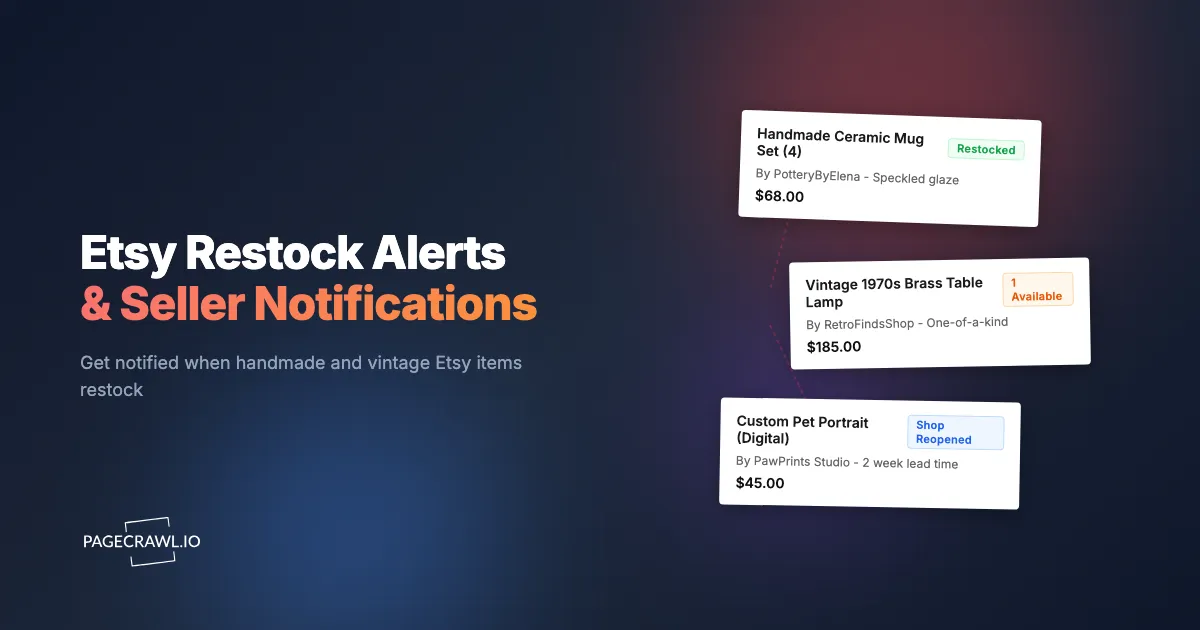
A ceramicist in Portland makes hand-thrown mugs that sell out within hours of listing. A vintage watch dealer posts one-of-a-kind pieces that disappear before most followers even see the notification. A jewelry maker releases seasonal collections in batches of 20 that generate waitlists of 200. On Etsy, the most desirable items exist in a permanent state of scarcity, and the gap between "in stock" and "sold out" can be measured in minutes.
Unlike mass-produced retail products where restocks are a matter of supply chain timing, Etsy's scarcity is structural. A single artisan can only produce so many hand-knitted sweaters per week. A vintage dealer finds items one at a time. A small batch producer deliberately limits runs to maintain exclusivity and quality. The result is a marketplace where demand consistently outpaces supply for popular sellers, and the buyers who get the items are simply the ones who happened to check at the right time.
This guide covers why Etsy's built-in tools leave collectors and enthusiasts at a disadvantage, how to set up automated monitoring for specific listings and seller shops, and strategies for never missing another restock from your favorite makers.
Why do Etsy items sell out so fast?
Etsy scarcity is structural, not seasonal. One maker can only produce a fixed number of items per week, vintage dealers find pieces one at a time, and social media can send thousands of buyers to a small shop overnight. Understanding which pattern a seller follows helps you set up monitoring that actually works for that item.
Handmade Production Limits
The core appeal of Etsy is handmade goods, and handmade means limited production capacity. A potter who throws mugs by hand can make perhaps 20-30 per week. A leather worker stitching bags by hand might complete 5-10 per month. When a maker gains popularity through social media or word of mouth, their production capacity does not scale proportionally with demand.
Popular makers often adopt one of two patterns: continuous production with items selling as they are completed, or batch releases where a collection drops all at once. Both patterns create scarcity, but they require different monitoring approaches.
Vintage and One-of-a-Kind Items
Vintage items on Etsy are by definition unique. When a 1970s Omega watch or a mid-century modern lamp sells, there is no restock of that exact item. However, vintage dealers typically source items in the same category over time. A dealer specializing in vintage Pyrex will continuously list new finds. Monitoring the dealer's shop page catches new listings in your collecting category even though each individual item is unique.
Social Media-Driven Demand Spikes
A single TikTok video or Instagram reel can send thousands of potential buyers to a small Etsy shop within hours. Makers who go viral face sudden demand that can exceed months of normal sales in a single day. These demand spikes create extended sold-out periods as the maker works through a backlog.
Monitoring helps you catch the restock after the initial viral surge subsides, when the maker resumes normal listing patterns and competition from impulse buyers has decreased.
Seasonal and Holiday Patterns
Many Etsy sellers create seasonal collections: holiday ornaments, spring garden decorations, back-to-school supplies, wedding season accessories. These seasonal items have predictable selling periods but unpredictable restock timing. A seller might make holiday ornaments in batches from September through November, with each batch selling out within days.
Limited Editions and Collaborations
Some Etsy sellers deliberately create limited-edition items or collaborate with other makers for one-time releases. These drops function similarly to streetwear or limited-edition sneaker releases, with dedicated followings refreshing pages at announced drop times.
Does Etsy notify you when an item is back in stock?
No. Etsy has no "notify me when this item is restocked" button for individual listings. You can favorite a listing or follow a shop, and the Etsy Help Center documents both, but neither guarantees an alert when a sold-out item returns. Here is what each option actually does.
Favoriting Items
You can "favorite" (heart) an Etsy listing, which adds it to your favorites list. For active listings, this mainly serves as a bookmark. For sold-out listings, favoriting does nothing to notify you when the seller restocks. Etsy does not send restock notifications based on favorites.
Following Shops
Following an Etsy shop adds the seller to your "Following" feed. In theory, new listings from followed shops appear in your Etsy homepage feed. In practice, the feed is algorithmic and does not show every listing from every followed shop. High-volume sellers may have some listings surface while others are buried.
Etsy may send occasional emails about shop updates from sellers you follow, but these emails are inconsistent, often delayed, and mixed with general Etsy promotional content. They are not reliable real-time notifications.
Seller-Managed Waitlists
Some sellers manage their own waitlists through Etsy conversations or external tools. These are seller-dependent and vary widely in reliability. Not all sellers offer waitlists, and those who do may not notify everyone when items restock.
The Gap
The fundamental gap is that Etsy has no automated "notify me when this item is back in stock" feature for individual listings. Unlike Amazon's (unreliable but existent) notification button, Etsy provides no equivalent for sold-out items. The expectation is that buyers will either follow the shop and check back manually, or reach out to the seller directly.
For collectors and enthusiasts tracking multiple sellers and items, manual checking does not scale. Checking 15 seller shops daily is a commitment that quickly becomes tedious and inconsistent.
Monitoring Specific Etsy Listings
For items you know will be restocked (the seller regularly produces them), pointing stock availability monitoring with restock alerts at the specific listing page is the most direct approach.

How Etsy Listing Pages Work
Each Etsy listing has a unique URL in the format:
https://www.etsy.com/listing/1234567890/item-name-descriptionWhen an item sells out, the listing page changes. The "Add to cart" button typically changes to "Item is no longer available" or similar text. The listing may also show "Sold" or be marked as inactive. When the seller restocks, the listing reverts to showing available inventory with the purchase button active again.
Some sellers create new listings for each batch rather than restocking the original listing. In that case, monitoring the seller's shop page (covered below) is more effective than monitoring a specific listing URL.
Setting Up Listing Monitoring
Step 1: Get the Listing URL
Navigate to the specific Etsy listing you want to track. Copy the full URL. If the item is currently sold out, the URL still works and shows the sold-out status.
Step 2: Create an Availability Monitor
Add the listing URL as a PageCrawl monitor. For restock tracking, you have two effective approaches:
Option A: Full Page monitoring captures all text on the listing page, including availability status, price, variation options, and shipping information. You will be alerted on any change, which catches restocks along with price adjustments and description updates.
Option B: Targeted element monitoring focuses on the specific part of the page that indicates availability. This reduces false alerts from unrelated changes like the seller updating the description or shipping options.
For guidance on finding the right element to target, see the CSS selector guide.
Step 3: Set Check Frequency
For high-demand items from popular sellers, check every 2-4 hours. Items from these sellers can sell out within hours of restocking, so catching the restock early matters.
For less competitive items, checking every 6-12 hours provides good coverage without excessive monitoring.
Step 4: Configure Fast Notifications
Speed matters for Etsy restocks. An alert goes out when the next scheduled check detects the restock, so pair a tight check interval with a channel you actually watch. By the time you see an email notification, open it, navigate to the listing, and complete checkout, the item may already be sold out again. Use the fastest notification channels available:
- Slack or Discord: Fast delivery with mobile push notifications
- Telegram: Straight to your phone as a push message
- Webhook: Trigger custom automation (covered later)
- Web push notifications: Browser-based alerts if you keep your monitoring dashboard open
Email works for less competitive items but introduces delays that can mean missing fast-selling restocks.
Monitoring Seller Shop Pages
For sellers who create new listings (rather than restocking existing ones) or for vintage dealers who list unique finds, monitoring the seller's shop page catches new items as they appear.
Shop Page Structure
Every Etsy seller has a shop page:
https://www.etsy.com/shop/ShopNameThe shop page displays all active listings, typically with the newest items first. When a seller adds new listings, the shop page content changes to include the new item titles, prices, and thumbnail descriptions.
Setting Up Shop Monitoring
Create a PageCrawl monitor for the seller's shop URL using "Content Only" mode. This captures the listing titles, prices, and descriptions while stripping the Etsy site navigation and promotional elements that change independent of the seller's inventory.
Enable AI summaries to receive human-readable descriptions of what changed: "New listing added: Hand-thrown Ceramic Mug in Sage Green Glaze, $38.00. New listing added: Matching Ceramic Bowl in Sage Green Glaze, $45.00." That is far more actionable than a raw text diff.
Filtering for Specific Item Types
Some sellers have large shops with hundreds of items across multiple categories. If you only care about a specific type of item (the ceramic mugs, not the plates or vases), you have options:
Category pages: Many Etsy shops organize items into sections. The section URL looks like:
https://www.etsy.com/shop/ShopName/section_id=12345678Monitor the specific section rather than the entire shop to reduce noise from unrelated new listings.
AI summaries with keywords: Even if you monitor the full shop, AI summaries let you quickly scan for relevant items without reading through every change.
Monitoring Multiple Sellers and Items
Serious Etsy collectors often track items across many sellers. Here is how to organize monitoring at scale.
Organizing by Category
Create folders in PageCrawl to group your monitors logically, following the patterns in the guide to organizing monitored pages with labels, folders, and workspaces:
- Ceramics: Monitors for pottery and ceramic sellers
- Vintage Watches: Monitors for vintage watch dealers
- Jewelry: Monitors for handmade jewelry makers
- Seasonal: Temporary monitors for holiday or seasonal items
This organization lets you manage notification preferences by category. You might want fast push notifications for high-priority ceramics but daily digest emails for vintage watches where items stay available longer.
Prioritizing by Scarcity
Not all sellers have the same scarcity dynamics. Some popular makers sell out in minutes, while others have items available for days or weeks. Prioritize your monitoring resources accordingly:
High scarcity (sells out in hours): Check every 1-2 hours, use the fastest notification channels you have, consider webhook automation for the quickest response.
Medium scarcity (sells out in days): Check every 6-12 hours, standard push notifications are sufficient.
Low scarcity (available for weeks): Check daily, email notifications work fine.
Budget Management
When tracking many desirable items, it is easy to overspend when multiple restocks happen simultaneously. Some organizational strategies:
- Set a monthly Etsy budget before monitoring, and track spending against it
- Prioritize your monitors so you know which items to purchase first if multiple restock at once
- Use webhook automation to log restocks to a spreadsheet, giving you a record of what became available and when
Vintage and Collectible Monitoring Strategies
Vintage collecting on Etsy requires a different approach than monitoring handmade goods because items are unique rather than reproducible.
Monitoring Vintage Dealers by Specialty
Most successful vintage dealers on Etsy specialize in specific categories: mid-century modern furniture, vintage cameras, antique jewelry, vinyl records, vintage clothing from specific eras. Monitor the shop pages of dealers who specialize in your collecting area.
Over time, you build a network of monitored dealers that functions like a curated sourcing pipeline. New finds from trusted dealers appear in your alerts as they are listed, before most other buyers see them.
Search-Based Discovery
Etsy search results pages can be monitored to catch new listings matching specific criteria. A search URL like:
https://www.etsy.com/search?q=vintage+omega+seamaster&explicit=1&ship_to=USMonitoring this search results page catches new listings from any seller, not just those you already follow. This is particularly valuable for rare items where you do not know which dealer will find one.
Note: Etsy search results are somewhat dynamic and personalized, so changes detected may include organic result reordering alongside genuinely new listings. AI summaries help distinguish new items from reshuffled results.
Condition and Authenticity Tracking
For collectibles where condition matters (vintage watches, antique furniture, rare books), monitor the full listing page rather than just availability. Sellers sometimes update condition descriptions, add new photos, or revise pricing based on condition reassessment. Catching these updates gives you better information before purchasing.
Price Tracking for Etsy Items
Beyond restock monitoring, price tracking on Etsy listings is valuable for several scenarios.
Resale Market Items
Some Etsy sellers deal in resale market items (sneakers, limited-edition goods, collectible toys) where prices fluctuate based on market demand. Monitoring price changes on these listings helps you buy at the right time.
Seller Price Adjustments
Sellers occasionally adjust prices, especially during slow periods, holidays, or when they are running shop-wide promotions. Etsy does not have a formal sale system like Amazon, so "sales" are simply price reductions that you notice only if you are watching.
Some sellers use Etsy's built-in sale feature to offer percentage discounts. These appear on the listing page as a crossed-out original price with the sale price. Monitoring catches these promotions.
Tracking with Price Mode
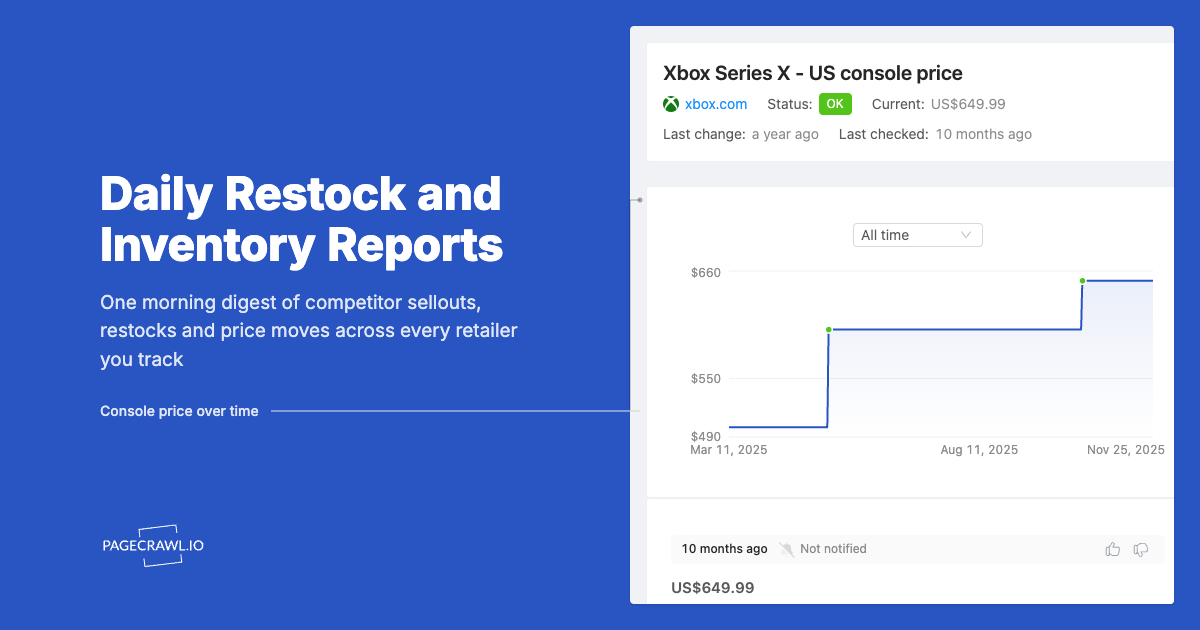
For items where price is your primary concern, use "Price" tracking mode in PageCrawl. This automatically detects and tracks the displayed price on the listing page, alerting you when a check finds a different figure. The walkthrough on monitoring numeric values to spot trends shows how the charts and statistics work. Combined with availability monitoring (using a separate monitor or full-page mode), you get complete visibility into both price and stock status.
For broader price tracking approaches across multiple marketplaces, see the out-of-stock monitoring guide which covers availability-focused tracking patterns.
Webhook Automation for Etsy Monitoring
Webhooks enable automated responses to Etsy listing changes, which is valuable when speed is critical.
Fast Mobile Alerts
Configure a webhook that triggers a push notification service (Pushover, Pushbullet, or ntfy) to push the alert to your phone as soon as a check detects the restock. This is faster than Slack or email for time-critical restocks.
The webhook fires when PageCrawl detects a change, sends JSON data to your automation endpoint, and the automation pushes the alert onward as soon as it receives the payload.
Auto-Open Listing Page
Build a simple automation that, when triggered by a restock webhook, automatically opens the Etsy listing URL in your browser. Combined with a saved payment method on Etsy, this reduces the time between notification and purchase to the minimum.
Restock Logging
Send every restock event to a spreadsheet to build historical data on seller restocking patterns. Over time, you can identify patterns: "This seller typically restocks on Fridays around 10am Pacific" or "New batches appear every 2-3 weeks." This intelligence helps you anticipate future restocks.
Community Alerts
If you are part of a collecting community, route restock alerts to a shared Discord server or Slack channel. Multiple collectors monitoring different sellers and sharing alerts creates a collective intelligence network that benefits everyone.
What makes Etsy listings tricky to monitor?
Four things trip up naive monitoring on Etsy: variation-level stock that the main listing hides, shops going into vacation mode, four-month listing renewals that look like edits, and shipping or currency tweaks. Each one can produce a change that is not a restock, and each has a specific fix.
Variation Availability
Many Etsy listings offer variations (colors, sizes, materials). A listing might show as "available" even when specific popular variations are sold out. The main listing page shows "Add to cart" as long as any variation remains available.
If you want a specific variation (the sage green mug, not the terracotta), monitoring the main listing page for availability changes is not sufficient because the listing stays "available" as long as other variations exist. In this case, monitoring the full page text and checking the AI summary for mentions of your specific variation is the best approach.
Seller Vacation Mode
Etsy sellers can put their shop on "vacation mode," which hides all listings temporarily. When they return from vacation, all listings reappear. This can trigger false restock alerts if you are monitoring individual listings that were hidden by vacation mode rather than genuinely sold out.
AI summaries help distinguish between vacation-related changes and actual restocks.
Listing Renewals vs. Restocks
Etsy listings expire after four months and must be renewed by the seller, as the Etsy Help Center explains. A renewal is not a restock, but it can trigger a change detection if the renewal modifies the listing date or other metadata. Full-page monitoring may catch these renewal changes alongside genuine restocks.
Using "Content Only" mode reduces noise from metadata changes by focusing on the listing's substantive content.
Shipping Profile Changes
Sellers sometimes update shipping options, processing times, or shipping costs. These changes appear on the listing page and can trigger alerts if you are monitoring the full page. Targeted element monitoring that focuses on the availability section rather than the entire listing reduces these false alerts. PageCrawl's noise filtering provides an additional layer of protection by automatically suppressing alerts for minor, non-meaningful changes like small shipping cost adjustments from exchange rate fluctuations, so you only get notified when something worth your attention actually changes on the listing.
International Listings and Currency
Etsy shows prices in your local currency based on your location, but the seller lists in their own currency. Price monitoring may show minor fluctuations due to exchange rate changes rather than actual seller price changes. If you see small daily price movements on international listings, exchange rates are likely the cause.
Combining Etsy Monitoring with Other Marketplaces
Many collectible categories span multiple platforms. Vintage watches appear on Etsy, eBay, Chrono24, and specialized dealer sites. Limited-edition items might be available on both the maker's Etsy shop and their own brand website.
Cross-Platform Availability Tracking
Create monitors for the same item category across multiple platforms. When a vintage Pyrex pattern appears on any monitored platform, you get an alert regardless of where it was listed.
For Amazon availability tracking, including items that overlap with Etsy categories, see the Amazon in-stock alerts guide.
Price Comparison Across Platforms
The same or similar items often appear at different prices across platforms. Monitoring prices on Etsy, eBay, and direct seller websites lets you identify the best value. Webhook automation can compare prices across platforms and alert you only when the best overall price appears.
How do you turn a restock alert into a purchase?
Save your payment method in advance, know the seller's shipping costs before the alert lands, and decide ahead of time what you are willing to pay. Monitoring gets you the alert when a check spots the restock; these habits are what close the gap between reading it and checking out.
Pre-Save Payment Information
Have your Etsy payment method saved and up to date. When a restock alert arrives, every second counts for popular items. You do not want to be entering credit card information while inventory dwindles.
Know Shipping Options in Advance
Check the seller's shipping options and costs before a restock so you can make quick decisions during checkout without deliberating over shipping choices.
Communicate with Sellers
Some sellers appreciate knowing that customers are eagerly waiting for restocks. A polite Etsy message letting a seller know you are interested in their next batch can sometimes get you early notice or reserved inventory. Not all sellers accommodate this, but many small makers value the direct relationship.
Set Reasonable Expectations
Handmade items are made by people, not machines. Production delays, material sourcing issues, and life events affect restock timing. Monitoring automates the watching so you do not have to obsess over it, but patience remains necessary.
Choosing your PageCrawl plan
PageCrawl's Free plan lets you monitor 6 pages with 220 checks per month, which is enough to validate the approach on your most critical pages. Most teams graduate to a paid plan once they see the value.
| Plan | Price | Pages | Checks / month | Frequency |
|---|---|---|---|---|
| Free | $0 | 6 | 220 | every 60 min |
| Standard | $8/mo or $80/yr | 100 | 15,000 | every 15 min |
| Enterprise | $30/mo or $300/yr | 500 | 100,000 | every 5 min |
| Ultimate | $99/mo or $999/yr | 1,000 | 100,000 | every 2 min |
Annual billing saves two months across every paid tier. Enterprise and Ultimate scale up to 100x if you need thousands of pages or multi-team access.
Standard at $80/year pays for itself the first time you land a limited item you would have missed. A single successful restock purchase on a sought-after piece typically covers a year of monitoring with room to spare. 100 pages is enough to track dozens of sellers across Etsy and other platforms simultaneously, so you can build a broad network without manually checking each shop. If you are sourcing for resale or running a serious collection, the faster check intervals on higher tiers mean you are less likely to lose a restock to someone with a quicker alert setup.
Getting Started
Choose 2-3 Etsy sellers or specific listings you care about most. For sellers who restock the same items, monitor the specific listing URL. For vintage dealers or sellers who create new listings for each batch, monitor the shop page URL in "Content Only" mode. Set up Slack, Discord, or Telegram notifications for the fastest alert delivery.
Run your monitors for a couple of weeks to learn each seller's restocking cadence. Some restock weekly, others monthly, and some on irregular schedules. Once you understand the pattern, you can adjust check frequencies accordingly and add more sellers to your monitoring list.
PageCrawl's free tier includes 6 monitors, enough to track a few priority sellers and listings. Paid plans start at $80/year for 100 monitors (Standard) and $300/year for 500 monitors (Enterprise), giving serious collectors room to build a comprehensive monitoring network across many sellers and platforms.