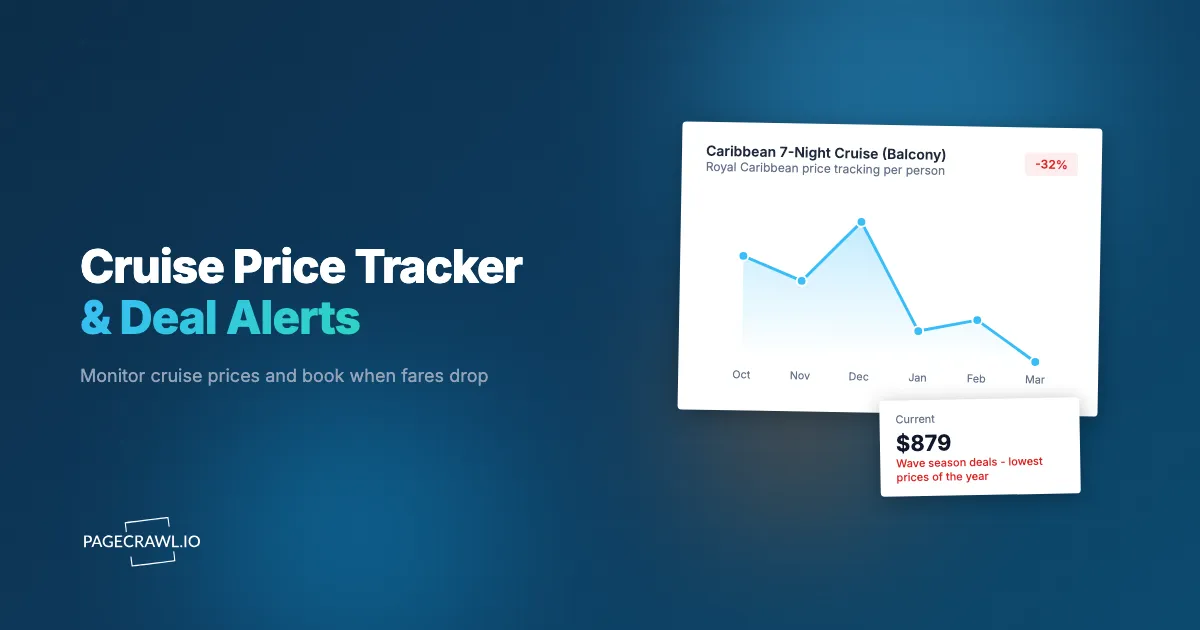
You booked a 7-night Caribbean cruise for $1,200 per person. Three weeks later, the same cabin category on the same sailing dropped to $899. That is $602 you left on the table for a couple. Unlike airlines, many cruise lines will reprice your booking or offer onboard credit if prices drop after you book. But only if you catch the drop.
Cruise pricing is among the most opaque in travel. The same cabin on the same ship can vary by hundreds of dollars from one week to the next, with no public explanation and no alert system. Cruise lines adjust prices based on booking pace, cabin inventory, competing sailings, and seasonal demand. They do not notify past bookers when fares decrease. They rely on you not checking.
This guide covers how cruise pricing works, what to monitor across major cruise lines, how to set up automated tracking for specific sailings, and how to combine cruise monitoring with flight tracking for complete vacation planning.
How does cruise pricing work?
Cruise lines price cabins dynamically: fares start at an introductory rate when a sailing opens, rise as popular categories fill, and can drop sharply when a ship is not filling at target pace. Understanding these mechanics helps you set up more effective monitoring and recognize when a drop is worth acting on.
Dynamic Pricing and Revenue Management
Cruise lines use revenue management systems similar to airlines, but with some important differences. A ship might have 2,000 cabins across a dozen categories, each priced independently based on demand, booking velocity, and time until departure.
Prices generally start at an introductory rate when a sailing opens (often 12-18 months before departure), rise as popular cabin categories fill, and may drop again as the sailing date approaches if the ship is not filling at target pace. The pricing curve is not linear. A sailing can see prices rise for weeks, drop suddenly when a block of cabins is released, then climb again.
Unlike airline seats where every economy seat is functionally identical, cruise cabins vary dramatically. An interior cabin, ocean view, balcony, and suite on the same sailing might be priced $600, $900, $1,400, and $3,500 respectively. Each category has its own supply and demand dynamics, which means prices across categories can move in different directions simultaneously.
Category Upgrades and Guarantees
Cruise lines offer "guarantee" cabins at a discount, where you accept a specific category (balcony, for example) but the cruise line assigns the actual cabin. These guarantee rates are often cheaper than selecting a specific cabin and sometimes result in a free upgrade to a higher category when the ship does not sell out.
Monitoring guarantee pricing separately from assigned cabin pricing gives you a fuller picture of what a sailing actually costs. A guarantee rate drop might signal that the cruise line is struggling to fill that category.
Promotional Add-Ons and Packages
Modern cruise pricing extends beyond the cabin fare. Drink packages, Wi-Fi, excursion credits, and specialty dining packages significantly affect total cost. Cruise lines frequently bundle these into promotions, sometimes including $200-$400 worth of add-ons "free" with booking.
These promotions change the effective value of a booking even when the cabin price stays constant. A sailing priced at $1,200 with a free drink package (normally $80/day, or $560 for a 7-night cruise) is effectively $640 cheaper than the same $1,200 fare without the package.
Tracking both cabin prices and current promotional offers gives you the complete picture. A cabin price increase paired with a generous new promotion might actually represent a better deal than the previous lower fare.
Early Booking vs Last-Minute Deals
The cruise industry has traditionally rewarded early bookers with the best prices. Popular sailings on newer ships and holiday departures often sell out months in advance, and the cheapest cabins go first. Waiting for a last-minute deal on a Christmas Caribbean cruise is a losing strategy.
However, less popular itineraries, repositioning cruises, and shoulder-season sailings frequently see price drops as departure approaches. A transatlantic crossing in November or an Alaska sailing in late September might drop 30-40% in the final 60 days if the ship has significant unsold inventory.
The key insight: whether early booking or late booking produces better prices depends entirely on the specific sailing. Monitoring prices over time reveals which pattern applies to the cruise you want.
What should you track across cruise lines?
Track the specific sailing page for each cruise you are considering, the cabin category you actually want, and the add-ons that change the effective price: drink packages, internet, and excursions. Different cruise lines and booking platforms require slightly different monitoring strategies.
Specific Sailing Prices
The most valuable monitoring targets a specific sailing you are considering or have already booked. Each sailing has a unique page on the cruise line's website showing current pricing across cabin categories.
Royal Caribbean: Sailing pages show prices by cabin category with clear "from" pricing. Balcony and suite prices are displayed prominently. Royal Caribbean's "Best Price Guarantee" means they will match a lower price found before final payment, making post-booking monitoring especially valuable.
Carnival: Prices displayed by cabin type with frequent promotional bundling. Carnival runs "Early Saver" rates that include a price protection guarantee, but you still need to notice the drop and contact them.
Norwegian Cruise Line: "Free at Sea" promotions bundle drink packages, Wi-Fi, excursion credits, and specialty dining. The sticker price might look higher, but included amenities make Norwegian's effective pricing competitive. Monitor both the fare and which "Free at Sea" perks are currently included.
MSC Cruises: Aggressive pricing with frequent flash sales. MSC tends to have more dramatic price swings than other major lines, making monitoring particularly rewarding.
Celebrity and Princess: Premium lines with less frequent but meaningful price adjustments. Drops of $100-200 per person are common as sailings approach.
Cabin Category Pricing
Rather than tracking just the cheapest available fare, monitor the specific cabin category you want. Interior cabin prices might hold steady while balcony prices drop significantly due to excess inventory in that category.
Set up separate monitors for each category you would accept. If you want a balcony but would take an ocean view at the right price, track both.
Drink and Internet Packages
Drink packages ($60-100/day per person) and internet packages ($15-30/day) represent significant additional costs. Cruise lines periodically offer pre-cruise purchase discounts on these packages, typically 10-30% less than onboard pricing.
These package prices often appear on separate pages within your booking account or on the cruise line's "cruise planner" section. Monitor these pages to catch promotional pricing before your sailing.
Excursion Pricing
Shore excursions offered through the cruise line frequently adjust prices as sailings approach. Popular excursions sometimes sell out entirely. Monitoring excursion pages for your specific sailing catches both price drops and availability changes.
Methods for Tracking Cruise Prices
Several approaches exist for monitoring cruise fares, each with distinct advantages and limitations.
Cruise Line Price Alerts
Most major cruise lines offer some form of price notification, but these systems are limited and unreliable.
Royal Caribbean emails about general promotions, not specific price drops on sailings you have viewed. Carnival sends promotional emails, but these rarely target your specific sailing or cabin preference. Norwegian's notifications focus on new promotional periods rather than fare changes.
These built-in alerts serve the cruise line's marketing goals, not your price-tracking goals. They will happily notify you about new sailings but not about a $200 drop on the sailing you already booked.
Travel Agent Monitoring
A good travel agent monitors pricing on your behalf and contacts the cruise line for adjustments when prices drop. This is valuable but depends entirely on the agent's diligence and how many clients they manage. Some agents check daily. Others check weekly or only when you ask.
Travel agents also access cruise line inventory systems that sometimes show pricing not visible on public websites, including group rates, agency-exclusive promotions, and flash deals. If you have a dedicated travel agent, automated web monitoring complements their efforts by catching changes they might miss between checks.
Cruise Deal Aggregators
Sites like CruiseCompete, Vacations to Go, and Cruise Critic's deal sections aggregate pricing across multiple agencies and cruise lines. These are useful for general price awareness but update at varying frequencies and may not reflect real-time availability.
Monitoring these aggregator pages catches deals that appear from multiple sources, broadening your coverage beyond a single cruise line's website.
Automated Web Monitoring
Direct monitoring of cruise line websites gives you check-by-check visibility into pricing changes on specific sailings. This is the most reliable method for catching drops quickly on sailings you care about.
Setting Up Cruise Price Monitoring with PageCrawl
PageCrawl handles the technical challenges of monitoring cruise line websites and alerts you when a check detects a price change.

Finding the Right URLs to Monitor
Step 1: Navigate to your target sailing. Go to the cruise line's website and search for the specific sailing you want to track. Select your dates, ship, and destination to reach the results page showing cabin pricing.
Step 2: Refine to the cabin category. Filter or navigate to show pricing for your preferred cabin type (interior, ocean view, balcony, suite). Some cruise line sites display all categories on one page. Others require navigating to a category-specific view.
Step 3: Copy the URL. The URL typically encodes the sailing date, ship, destination, and sometimes the cabin category. This URL is what you will monitor. If you prefer not to copy URLs manually, the PageCrawl browser extension lets you add any page as a monitor directly from your browser while you are browsing cruise line websites. Click the extension icon, choose your tracking settings, and the monitor is created without switching to the PageCrawl dashboard, and the add-any-page bookmarklet does the same job straight from your browser bar.
Note: Some cruise line websites use dynamic page loading where the URL does not change as you browse different sailings. In these cases, you may need to look for direct sailing links from search results pages or use CSS selectors to target specific price elements on the page.
Configuring the Monitor
Add the sailing URL to PageCrawl using the "Price" tracking mode. This mode automatically identifies and tracks price elements on the page, focusing on numerical changes.
Monitoring Frequency: Set checks to every 4-6 hours for sailings more than 90 days out. Increase to every 1-2 hours for sailings within 60 days, when prices tend to change more frequently.
Content Focus: If the page contains prices for multiple cabin categories, use the element selector to target the specific category you care about. This prevents alerts triggered by price changes in categories you have no interest in.
Change Sensitivity: Configure alerts for any price decrease. For price increases, you may want a threshold (such as $50+) to avoid notifications for minor fluctuations. Understanding how to set up these thresholds ensures you only receive meaningful alerts.
Monitoring Multiple Sailings
If you are flexible on dates or considering several itineraries, set up separate monitors for each sailing. PageCrawl's free tier includes 6 monitors, which covers a reasonable number of sailing options while you narrow your decision.
For broader coverage, the Standard plan ($80/year for 100 pages) supports monitoring dozens of sailings across multiple cruise lines. This is especially useful during the planning phase when you are comparing itineraries.
Organize monitors using labels, folders, and workspaces to group them by cruise line, destination, or departure month. This keeps your dashboard manageable as you add sailings.
Setting Up Notifications
Configure alerts through your preferred channel:
Email: Good for non-urgent monitoring of sailings far in the future. You will see the alert when you check email.
Slack or Discord: Useful if you already use these platforms, providing desktop and mobile push notifications. Learn more about connecting Slack alerts to your monitoring workflow.
Webhooks: For advanced users, webhook integration can push price changes into spreadsheets, databases, or custom applications that track pricing trends over time.
Mobile Push: Get push notifications on your phone, important for last-minute deals that may sell out quickly.
Monitoring Multiple Sailings Strategically
Effective cruise price tracking goes beyond watching a single sailing. Strategic monitoring covers your options and catches opportunities you might not have considered.
Building a Sailing Comparison Dashboard
When deciding between sailings, set up monitors for your top 3-5 options and compare price movements over a few weeks. Sailings where prices are dropping may indicate lower demand, which could mean further drops ahead. Sailings where prices are rising suggest strong demand, and waiting will likely cost more.
PageCrawl's dashboard capabilities let you view all your monitored sailings in one place, making comparison straightforward.
Tracking Repositioning Cruises
Repositioning cruises (when ships move between seasonal markets) often represent extraordinary value. A 14-night transatlantic repositioning might cost less than a 7-night Caribbean sailing on the same ship. These sailings are less marketed and pricing can be volatile.
Monitor repositioning cruise pages throughout the year. Lines announce these sailings 12-18 months in advance, and prices typically start reasonable, rise when enthusiasts snap up popular cabins, then drop again if the ship does not fill.
Monitoring Flash Sales and Limited Promotions
Cruise lines run flash sales lasting 24-72 hours with significant discounts on select sailings. These are difficult to catch manually because they appear without warning and expire quickly.
Set up monitors for cruise line "deals" or "special offers" pages. When a new flash sale appears, you will receive an alert and can check whether any of your target sailings are included.
Combining Cruise and Flight Monitoring
For fly-cruise vacations, the total cost depends on both the cruise fare and the airfare to the departure port. Optimizing both can save hundreds more than focusing on either alone.
Monitoring Departure Port Airfare
Once you have identified your sailing, monitor flights to the departure port city with travel and flight price monitoring. Caribbean cruises typically depart from Miami, Fort Lauderdale, or Galveston. Alaska cruises leave from Seattle or Vancouver. European cruises depart from Barcelona, Rome, or Southampton.
Set up flight price monitors alongside your cruise monitors, and if you plan to drive to the port, track local gas prices for the road trip too. A $200 flight price drop combined with a $150 cruise fare reduction means $700 saved for a couple.
Our flight price tracking guide covers the details of setting up airfare monitoring, including which booking sites to track and how to configure alerts.
Timing the Booking
Cruise fares and airfares do not always move in the same direction. You might see cruise prices dropping while flights to the departure port are rising due to seasonal demand. Monitoring both simultaneously lets you book each component at its optimal price point rather than committing to both at the same time.
Consider booking the cruise first (most lines offer cancellation with deposit refund before final payment) and continuing to monitor both the cruise fare and the airfare. Rebook the cruise if it drops, and book the flight when it hits your target price.
Package Deals vs Separate Booking
Some cruise lines offer air-sea packages bundling flights with the cruise. Monitor both the package price and the separate component prices. Sometimes the package is a genuine deal. Other times, booking independently is hundreds cheaper.
Advanced Monitoring Strategies
Price History Analysis
After monitoring a sailing for several weeks, you accumulate price history that reveals patterns. Some sailings show steady pricing with occasional sharp drops during promotional periods. Others gradually decrease as departure approaches. Use this history to predict future movements and set realistic target prices.
Competitor Line Comparison
Similar itineraries often run on competing cruise lines. A 7-night Eastern Caribbean cruise might be available on Royal Caribbean, Carnival, and Norwegian departing within days of each other from the same port. Monitoring equivalent sailings across lines catches whichever one offers the best value at any point.
Group and Family Booking Optimization
For group bookings, some cruise lines offer the third and fourth passenger rates at significant discounts (sometimes "kids sail free" promotions). Monitor the standard fare and the promotional pages for your sailing. A new "kids sail free" promotion appearing could save your family thousands.
Common Challenges and Solutions
Dynamic Page Content
Cruise line websites rely heavily on dynamic content loading. Prices might populate after the initial page loads, requiring a monitoring tool that renders pages fully before extracting content. PageCrawl handles this by rendering pages completely, capturing content that simpler monitoring tools miss.
Login-Required Pricing
Some promotional rates or loyalty member pricing requires authentication. For publicly visible pricing, standard monitoring works perfectly. For member-exclusive rates, check whether the cruise line displays member pricing on public pages (many do, showing the discount to entice sign-ups) or whether you need alternative approaches.
Currency and Regional Pricing
Cruise lines sometimes display different prices based on your geographic location or the regional version of their website. If you are comparing prices across regions, monitor the specific regional URL for each. Be aware that currency fluctuations affect the real cost of bookings made in foreign currencies.
Choosing your PageCrawl plan
PageCrawl's Free plan lets you monitor 6 pages with 220 checks per month, which is enough to validate the approach on your most critical pages. Most teams graduate to a paid plan once they see the value.
| Plan | Price | Pages | Checks / month | Frequency |
|---|---|---|---|---|
| Free | $0 | 6 | 220 | every 60 min |
| Standard | $8/mo or $80/yr | 100 | 15,000 | every 15 min |
| Enterprise | $30/mo or $300/yr | 500 | 100,000 | every 5 min |
| Ultimate | $99/mo or $999/yr | 1,000 | 100,000 | every 2 min |
Annual billing saves two months across every paid tier. Enterprise and Ultimate scale up to 100x if you need thousands of pages or multi-team access.
On a single cruise booking, one detected fare drop typically saves a couple several hundred dollars through a rebook or onboard credit. That alone covers Standard at $80/year many times over. Standard supports 100 monitored pages, which is enough to track several sailings across multiple cabin categories, drink package pricing, and excursion pages simultaneously. Enterprise at $300/year fits travel professionals or frequent cruisers who monitor dozens of sailings across multiple lines at once.
Getting Started
Pick the one or two sailings you are most seriously considering and add them to PageCrawl using "Price" tracking mode. Set monitoring to every 4-6 hours and configure notifications through email or your preferred messaging platform.
Run the monitors for one to two weeks to establish a pricing baseline. You will quickly see how often prices change on your target sailings and how significant those changes are. Many users discover price movements they would never have caught manually, sometimes saving enough on a single booking to cover a year of monitoring.
PageCrawl's free tier includes 6 monitors, enough to track a couple of sailings across cabin categories and prove the value of automated cruise price tracking. Standard plans ($80/year for 100 pages) scale to cover multiple cruise options, drink package pricing, excursion pages, and flight monitoring for complete vacation planning. Enterprise plans ($300/year for 500 pages) serve travel professionals and frequent cruisers tracking dozens of sailings simultaneously.
Stop checking cruise line websites manually and hoping to catch a price drop. Automated monitoring turns cruise planning from guesswork into informed decision-making, ensuring you book at the right price or recapture savings on bookings you have already made.