In March 2024, the SEC adopted amendments to Rule 605 governing order execution quality disclosure. Firms that caught the update within the first week had months to prepare implementation plans. Firms that discovered it through industry newsletters weeks later found themselves compressing timelines. One firm learned about it only when a client asked whether they were compliant with the new requirements.
Financial services regulation moves fast and comes from multiple directions simultaneously. FINRA issues regulatory notices. The SEC publishes proposed and final rules, no-action letters, and interpretive guidance. The CFPB releases enforcement actions and supervisory highlights. The OCC updates its handbook. State regulators issue their own requirements. Self-regulatory organizations publish standards updates. Each source has its own publication schedule, website structure, and notification system (or lack thereof).
This guide covers the financial regulatory landscape you need to monitor, how to set up automated tracking across agencies, and how to build a compliance monitoring system that catches every relevant update without drowning your team in noise.
Which financial regulators do you actually need to monitor?
It depends on your charters and business lines, but most US firms watch four federal sources plus their states: FINRA for broker-dealer rules, the SEC for rulemaking and enforcement, the CFPB for consumer products, and the OCC for national banks. Self-regulatory organizations and state regulators sit on top of that. Confirm every requirement against the agency's own publication; this article is informational, not legal or compliance advice.
FINRA (Financial Industry Regulatory Authority)
FINRA regulates broker-dealers and their registered representatives. Key publications to monitor include:
Regulatory Notices: FINRA publishes regulatory notices throughout the year announcing rule changes, guidance, and compliance deadlines. These are the primary vehicle for communicating new requirements to member firms. Each notice includes an effective date and, for significant changes, a comment period.
Enforcement Actions: Monthly and weekly enforcement action publications reveal how FINRA interprets its rules in practice. Enforcement trends signal areas of increased regulatory focus that may affect your compliance priorities.
Exam Priorities: FINRA publishes annual examination priorities that indicate what their examiners will focus on in the coming year. This is a forward-looking document that shapes compliance programs across the industry.
Rules and Guidance: The FINRA rulebook is updated as new rules are adopted and existing rules are amended. Rule proposal pages show what is in the pipeline.
SEC (Securities and Exchange Commission)
The SEC's regulatory output is extensive and varied:
Proposed and Final Rules: Major rulemaking that creates new requirements or modifies existing ones. Proposed rules include comment periods where industry feedback can influence the final version. Final rules specify effective dates and compliance deadlines.
No-Action Letters: Staff responses to specific questions about rule application. While technically applicable only to the requesting party, no-action letters establish interpretive precedent that the entire industry relies on.
Staff Guidance and Interpretive Releases: Clarifications of existing rules and expectations. These can be as impactful as new rules because they change how existing rules are applied.
Enforcement Actions and Litigation Releases: SEC enforcement against firms and individuals for violations. These publications reveal enforcement priorities and interpretive boundaries.
EDGAR Filings: For firms that monitor competitors, partners, or clients, SEC filings on EDGAR provide financial and operational data, and pairing them with IR and earnings pages is the basis of an investment intelligence feed. Our SEC filings monitoring guide covers EDGAR tracking in detail.
CFPB (Consumer Financial Protection Bureau)
The CFPB regulates consumer-facing financial products and services:
Final Rules and Policy Statements: Rulemaking affecting lending, payments, credit reporting, and other consumer financial services.
Supervisory Highlights: Semi-annual publications describing common compliance issues found during examinations, without naming specific firms. These provide invaluable insight into what examiners are finding and what they expect.
Enforcement Actions: Public enforcement orders that often include detailed factual findings, revealing exactly what behavior triggered regulatory action and what remediation was required.
Advisory Opinions and Interpretive Rules: Guidance on how the CFPB interprets its regulations, often in response to industry questions.
Complaint Database Updates: The CFPB maintains a public database of consumer complaints. Monitoring complaint trends by product category or company can signal emerging regulatory focus areas.
OCC (Office of the Comptroller of the Currency)
The OCC supervises national banks and federal savings associations. Key publications include bulletins, advisory letters, and comptroller's handbook updates. These tend to be technically detailed and directly applicable to banking operations, and they sit at the centre of a banking and supervisory intelligence feed alongside FDIC, Fed, and FinCEN updates.
State Regulators
Every state has its own financial regulator (banking department, securities division, or financial services commission). State-level requirements can differ from or exceed federal requirements. For firms operating in multiple states, monitoring state regulators is essential but logistically challenging due to the sheer number of sources.
Self-Regulatory Organizations (SROs)
Beyond FINRA, other SROs publish rules and guidance. The MSRB (Municipal Securities Rulemaking Board) regulates municipal securities dealers. The NFA (National Futures Association) covers futures and derivatives. Each has its own publication cadence and website.
What does missing a regulatory update actually cost?
More than the fine. A missed update typically produces four separate costs: the monetary penalty itself, operational sanctions such as suspensions or registration restrictions, reputational damage that surfaces in every future due-diligence review, and the higher price of building a compliance programme under a compressed timeline.
Financial Penalties
FINRA's annual fines run into the tens of millions of dollars, and the SEC reports financial remedies from its enforcement programme in the billions each year. Individual enforcement actions can range from tens of thousands to hundreds of millions of dollars depending on the violation.
Even modest fines carry disproportionate costs when you include legal defense expenses, remediation costs, and the operational disruption of an enforcement proceeding.
Regulatory Sanctions
Beyond fines, regulators can impose operational restrictions. FINRA can suspend or bar individuals. The SEC can revoke registrations. The CFPB can require business practice changes that fundamentally alter operations. A compliance failure that leads to operational sanctions can threaten the viability of a business line.
Reputational Impact
Financial services firms depend on trust. Enforcement actions become public records. Clients, partners, and counterparties review regulatory histories during due diligence. A single enforcement action can trigger client departures, make it harder to attract talent, and create competitive disadvantage that persists for years.
Opportunity Cost of Late Compliance
Even without enforcement, late awareness of regulatory changes creates operational problems. Compliance programs built under compressed timelines are more expensive, more disruptive, and more likely to have gaps than those developed with adequate lead time. Early awareness is a competitive advantage.
Which publications deserve daily monitoring?
Four: FINRA Regulatory Notices, SEC final rules, CFPB enforcement actions, and FINRA enforcement actions. These carry compliance dates or set interpretive precedent, so a day of lag matters. Proposed rules, supervisory highlights, and staff guidance can run on a two-or-three-times-weekly cadence, and state and SRO publications weekly.
Critical (Monitor Daily)
- FINRA Regulatory Notices: New compliance requirements and deadlines directly applicable to broker-dealers
- SEC Final Rules: New or amended rules with compliance dates
- CFPB Enforcement Actions: Enforcement precedents that signal regulatory expectations
- FINRA Enforcement Actions: Industry-specific enforcement trends
Important (Monitor 2-3 Times Per Week)
- SEC Proposed Rules: Upcoming changes that require comment period participation or early implementation planning
- CFPB Supervisory Highlights: Examination findings that indicate compliance expectations
- SEC Staff Guidance and No-Action Letters: Interpretive developments that affect current practice
- OCC Bulletins: Banking-specific guidance updates
Useful (Monitor Weekly)
- SEC Litigation Releases: Broader enforcement context
- FINRA Exam Priorities (annual, but monitor for updates)
- CFPB Advisory Opinions: Interpretive guidance
- State regulator publications: State-specific requirements
- SRO rule updates: MSRB, NFA, and other SRO publications
Setting Up Multi-Agency Monitoring with PageCrawl
Automated monitoring replaces the manual process of checking multiple agency websites with a system that alerts you when new content appears.

Monitoring FINRA
Regulatory Notices Page
The FINRA regulatory notices page lists all published notices with dates, titles, and brief descriptions. Monitor this page using "Content Only" mode, which captures the notice listings without the FINRA site navigation, search interface, and footer content that changes independently.
Set the check frequency to daily. When a new notice appears, you receive an alert with the notice title and summary, letting you quickly assess relevance to your firm.
Enforcement Actions
FINRA's enforcement page lists monthly disciplinary actions. Monitor this page weekly. When new enforcement actions appear, the AI summary provides a readable overview of who was sanctioned and why, helping you assess whether the enforcement area is relevant to your compliance program.
Monitoring the SEC
Rulemaking Page
The SEC's rulemaking section organizes proposed and final rules with publication dates. Monitor the main rulemaking page in "Content Only" mode with daily checks. New rule publications trigger an alert with the rule title and type (proposed vs. final).
Press Releases and Statements
The SEC press releases page captures enforcement announcements, chair and commissioner statements, and policy developments. This is a high-volume page, so using AI summaries to triage alerts is essential. The summary tells you whether a press release covers an enforcement action, a new rule, or a policy statement, letting you route it to the appropriate team member.
No-Action Letters
The SEC no-action letter page updates less frequently but each update is significant for practitioners. Weekly monitoring is sufficient. When new letters appear, the change detection shows the topic and requesting party.
Monitoring the CFPB
Newsroom and Blog
The CFPB publishes enforcement actions, proposed rules, and supervisory highlights through its newsroom. Monitor this page daily in "Content Only" mode. The CFPB tends to publish in clusters, with several items appearing within the same week followed by quieter periods.
Policy and Compliance Resources
The CFPB's compliance resources page includes implementation guides, small entity compliance guides, and interpretive FAQs. These update less frequently but provide practical compliance guidance. Weekly monitoring catches updates without generating excessive alerts.
Monitoring State Regulators
For firms operating in multiple states, prioritize monitoring for the states where you have the most customers or the most complex regulatory relationships. Create a folder in PageCrawl for state regulators and add the news or publications page for each relevant state's financial regulator.
Set state monitors to weekly checks unless a specific state has pending regulatory activity that requires closer attention.
How do you avoid alert fatigue across multiple agencies?
Tier your alerts and split them across channels. Send only the four critical sources to a live compliance channel, batch the important-but-not-urgent sources into a daily email digest, and roll state and SRO updates into a weekly briefing. Monitoring many regulatory sources at once creates a real risk that volume causes your team to start ignoring notifications altogether.
Tiered Notification Strategy
Not every alert needs to go to every person:
Tier 1 (Same-day, all compliance staff): New FINRA regulatory notices, SEC final rules, CFPB enforcement actions. These require prompt awareness and potential action.
Tier 2 (Daily digest, compliance managers): SEC proposed rules, staff guidance, CFPB supervisory highlights. Important for planning but not requiring same-day response.
Tier 3 (Weekly summary, compliance leadership): State regulator updates, SRO publications, SEC litigation releases. Context and awareness rather than action items.
Channel Separation
Use different notification channels for different tiers:
- Slack channel (e.g., #compliance-critical): Tier 1 alerts for same-day attention
- Email digest: Tier 2 alerts compiled daily
- Weekly report: Tier 3 items summarized in a weekly compliance briefing
This separation ensures that critical updates stand out from routine publications.
AI Summary Triage
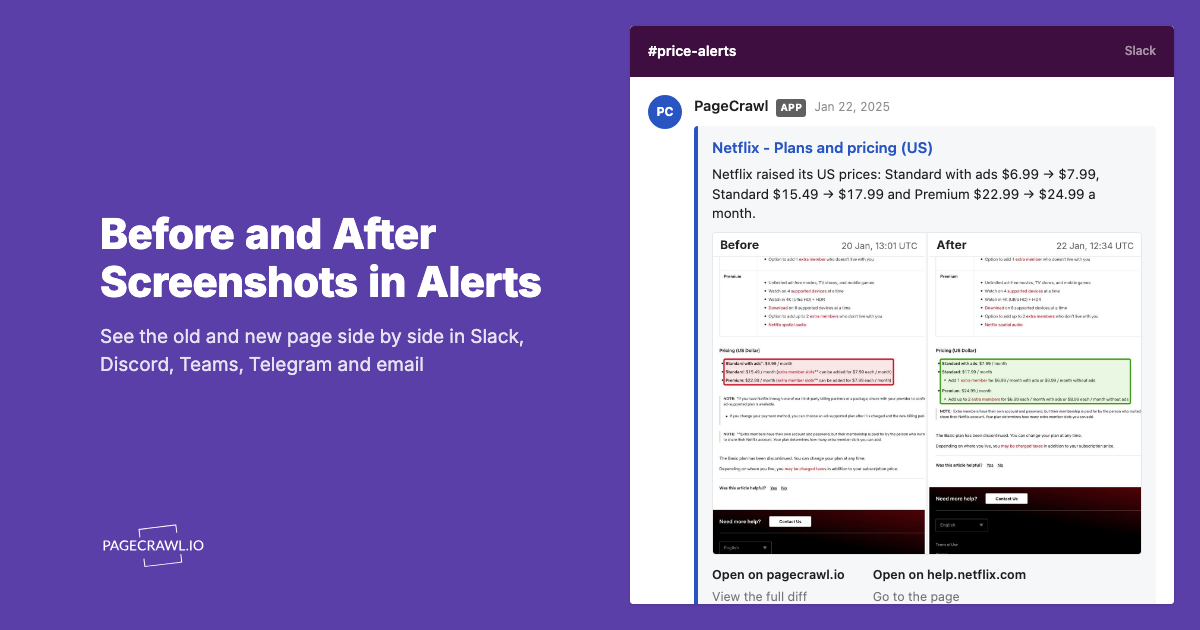
Enable AI summaries on all monitors. When an alert lands in your channel, the summary lets you assess relevance at a glance without navigating to the source page. A summary like "New FINRA Regulatory Notice regarding anti-money laundering customer identification program requirements, effective January 1, 2027, with comment period through September 30, 2026" tells you exactly what it is, whether it affects you, and when action is needed.
Centralized Review with Review Boards
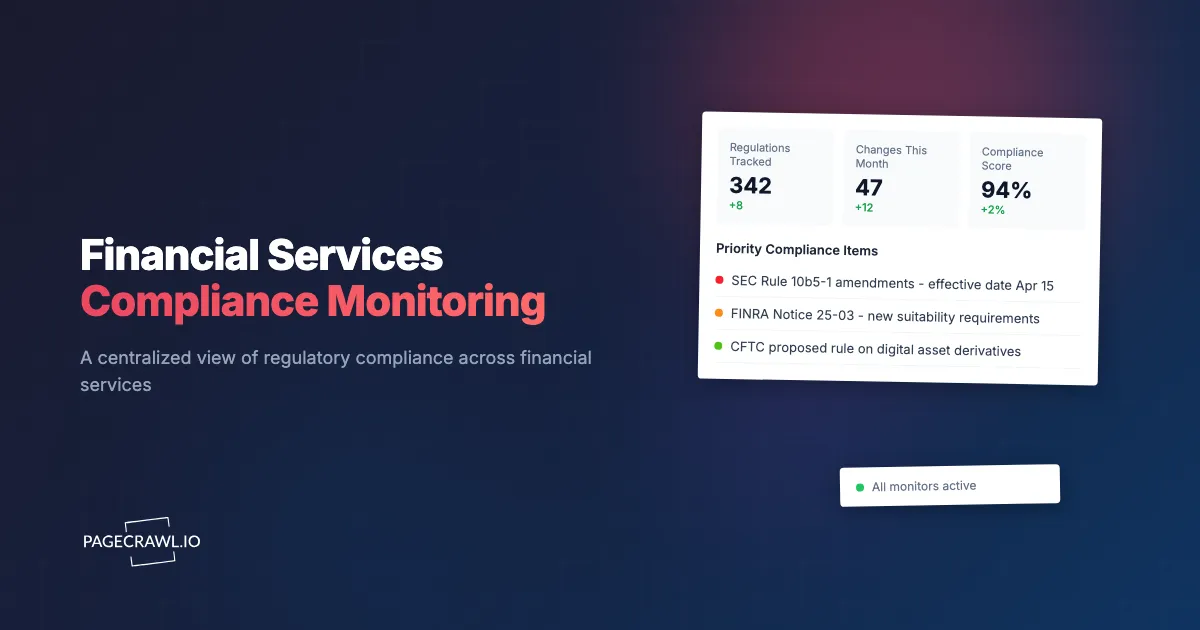
PageCrawl's Kanban-style Review Board gives compliance teams a shared workspace for triaging regulatory alerts. Instead of individual team members processing alerts in their own email inboxes, the review board shows all detected changes across every monitored agency in one place. Team members can mark changes as reviewed, flag items that need action, and leave internal notes for colleagues. This creates a documented audit trail showing that every regulatory update was seen, assessed, and acted on, which is exactly the kind of evidence examiners want to see during audits.
Building a Compliance Calendar
Regulatory changes come with deadlines: comment periods, effective dates, compliance dates. Tracking these dates is as important as knowing about the changes themselves.
Extracting Dates from Alerts
When a regulatory alert arrives, extract three key dates:
- Publication date: When the rule or notice was published
- Comment period deadline (if applicable): When comments are due on proposed rules
- Effective/compliance date: When the requirement takes effect
Add these dates to your compliance calendar or project management system.
Webhook Integration with Calendar Systems
Use PageCrawl's webhook functionality to route alert data to your task management or calendar system. When a new regulatory notice is detected, the webhook payload can trigger an automation that creates a calendar entry or task for compliance review. The reference on sending change data to any external service with webhooks documents the payload fields you will be mapping.
More sophisticated automation can parse the AI summary for dates and automatically create calendar entries with the correct deadlines.
Recurring Review Cadence
Establish a regular review cadence for compliance monitoring:
- Daily: Review Tier 1 alerts, assign action items
- Weekly: Review Tier 2 and 3 alerts, update compliance calendar
- Monthly: Assess overall regulatory trends, adjust monitoring priorities
- Quarterly: Review monitoring effectiveness, add or remove sources
Integrating with GRC Platforms
Many financial services firms use Governance, Risk, and Compliance (GRC) platforms to manage their compliance programs. PageCrawl's webhook output can feed into these platforms.
Common Integration Patterns
Regulatory change management: When a new rule is detected, a webhook triggers a new "regulatory change" record in your GRC platform. The compliance team can then track assessment, impact analysis, implementation planning, and verification through the GRC workflow.
Risk assessment updates: Enforcement action alerts can trigger risk assessment updates in your GRC system, flagging areas where enforcement activity has increased.
Audit trail: All detected regulatory changes are logged with timestamps, providing an audit trail demonstrating that your firm systematically monitors for regulatory updates.
Building the Integration
The webhook sends a JSON payload containing the monitored URL, detected changes, AI summary, and timestamp. Your GRC platform likely accepts data through an API or webhook intake. Connect the two using a middleware automation tool or a simple custom script that transforms PageCrawl's output format into your GRC platform's expected input format.
For complex integrations involving multiple regulatory sources feeding into a single GRC system, the webhook automation guide provides detailed implementation patterns.
Website Archiving for Compliance Records
Financial services firms often need to maintain records of regulatory publications and website content for compliance documentation.
Regulatory Record Keeping
When your monitoring detects a regulatory change, capturing the content at that point in time creates a compliance record. PageCrawl's change history maintains a record of what was detected and when, providing a timeline of regulatory awareness. For records that need to stand up to examiner scrutiny, PageCrawl's independently timestamped web archives seal each capture in the WACZ format, available on higher plans.
For more robust archiving needs, see the website archiving guide, which covers approaches to preserving web page content over time.
Examination Preparation
During regulatory examinations, examiners may ask about your firm's awareness of specific regulatory publications and your response timeline. A documented monitoring system with timestamped alerts demonstrates proactive compliance efforts.
Having a record that shows "FINRA Regulatory Notice 24-15 was detected on our monitoring system on [date], reviewed by compliance team on [date+1], impact assessment completed on [date+5]" is powerful evidence of a robust compliance program.
Multi-Firm and Multi-Jurisdictional Monitoring
Larger financial services organizations face additional monitoring complexity.
Holding Company Structures
Financial holding companies with multiple regulated subsidiaries may need to monitor different agencies for different entities. A holding company with a broker-dealer, an investment adviser, and a bank needs FINRA, SEC, and OCC monitoring, plus IRS tax code monitoring covering all of its entities, each routed to the appropriate compliance team.
Use PageCrawl folders to organize monitors by regulated entity and configure separate notification channels for each entity's compliance team.
International Operations
Firms with international operations face additional monitoring requirements from foreign regulators: the FCA (UK), ESMA (EU), MAS (Singapore), and others, along with cross-sector mandates such as the EU's NIS2 cybersecurity obligations for entities operating in Europe. The monitoring approach is the same: identify the regulator's publication page, create a content monitor, and route alerts to the appropriate team.
Language differences and time zones add complexity. AI summaries can help with initial triage of foreign-language regulatory publications, though professional translation should be used for detailed analysis.
State-by-State Compliance
For firms licensed in multiple states, monitoring each state's financial regulator is a significant task. Prioritize by business volume and regulatory complexity. States with large operations or complex regulatory frameworks (New York, California, Texas) deserve dedicated monitoring. Lower-volume states can be grouped and monitored on a weekly cadence.
Regulatory Technology Landscape
Several specialized regulatory technology (RegTech) solutions exist for financial services compliance monitoring. Understanding the landscape helps you choose the right approach.
Dedicated RegTech Platforms
Companies like Thomson Reuters Regulatory Intelligence, Wolters Kluwer, and CUBE offer comprehensive regulatory intelligence platforms. These are powerful but expensive, typically costing tens of thousands of dollars annually. They provide curated content, expert analysis, and structured regulatory data.
Best for: Large firms with dedicated compliance teams and budget for specialized tools.
Agency Email Lists
Most federal agencies offer email subscription lists for regulatory publications. These are free but limited: email-only delivery, no customization, and no integration capabilities. You receive everything the agency publishes, with no filtering for relevance.
Best for: Small firms with minimal monitoring needs and no integration requirements.
Web Monitoring Approach
PageCrawl and similar compliance monitoring tools offer a middle ground: automated monitoring across multiple sources with flexible alerting, webhook integration, and AI-powered summaries, at a fraction of the cost of enterprise RegTech platforms.
Best for: Firms that need multi-agency monitoring with integration capabilities and do not require the editorial analysis that enterprise platforms provide.
Common Challenges
Page Structure Changes
Regulatory agency websites occasionally redesign their pages, which can affect monitor targeting. The SEC, FINRA, and CFPB have all redesigned portions of their websites in recent years. When this happens, update your monitor URLs and element selectors to match the new page structure.
Using "Content Only" mode is more resilient to design changes than element-specific monitoring because it adapts to structural changes as long as the content remains accessible.
High-Volume Publication Pages
Some agency pages (SEC press releases, for example) publish frequently. This creates a high volume of alerts, most of which may not be directly relevant to your firm. Use AI summaries to triage quickly, and consider monitoring subsection pages (e.g., just the Division of Investment Management publications) rather than the main press release page.
Comment Period Tracking
Proposed rules with comment periods require tracking two events: the initial publication (to assess the proposed rule) and the final rule adoption (to implement requirements). Set up separate monitors or use your compliance calendar to track the progression from proposed to final.
Multi-Format Publications
Some regulatory publications are PDFs rather than web pages. FINRA regulatory notices, for example, are often published as PDFs linked from a listing page. Monitor the listing page to detect when new notices appear. The actual notice content will require manual review of the PDF.
Choosing your PageCrawl plan
PageCrawl's Free plan lets you monitor 6 pages with 220 checks per month, which is enough to validate the approach on your most critical pages. Most teams graduate to a paid plan once they see the value.
| Plan | Price | Pages | Checks / month | Frequency |
|---|---|---|---|---|
| Free | $0 | 6 | 220 | every 60 min |
| Standard | $8/mo or $80/yr | 100 | 15,000 | every 15 min |
| Enterprise | $30/mo or $300/yr | 500 | 100,000 | every 5 min |
| Ultimate | $99/mo or $999/yr | 1,000 | 100,000 | every 2 min |
Annual billing saves two months across every paid tier. Enterprise and Ultimate scale up to 100x if you need thousands of pages or multi-team access.
Standard at $80/year pays for itself against the cost of a single overlooked FINRA or SEC update, which can mean amended filings, policy revisions, or exam findings your firm has to explain. 100 pages covers the core federal agencies and the SROs most relevant to your business lines. Enterprise at $300/year extends to 500 pages with 5-minute checks and timestamped screenshots for your records. All plans include the PageCrawl MCP Server, so your compliance team can ask Claude to summarize every regulatory change from FINRA, SEC, or CFPB over a given period and pull the supporting diffs when preparing for an examination or updating your policies. AI assistants can create monitors through conversation on every plan, including Free.
Getting Started
Begin with three monitors: one for the FINRA regulatory notices page, one for the SEC rulemaking page, and one for the CFPB newsroom. Set all three to "Content Only" mode with daily check frequency and AI summaries enabled. Route alerts to a dedicated Slack channel or email folder.
These three monitors cover the primary federal regulatory sources for most financial services firms. Run them for two weeks to understand the publication cadence and calibrate your alert management process. Then expand to additional sources (OCC, state regulators, SROs) based on your firm's specific regulatory obligations.
PageCrawl's free tier includes 6 monitors, enough to cover the core federal agencies plus one or two additional sources. Paid plans start at $80/year for 100 monitors (Standard) and $300/year for 500 monitors (Enterprise), providing capacity for comprehensive multi-agency, multi-jurisdictional regulatory compliance monitoring.