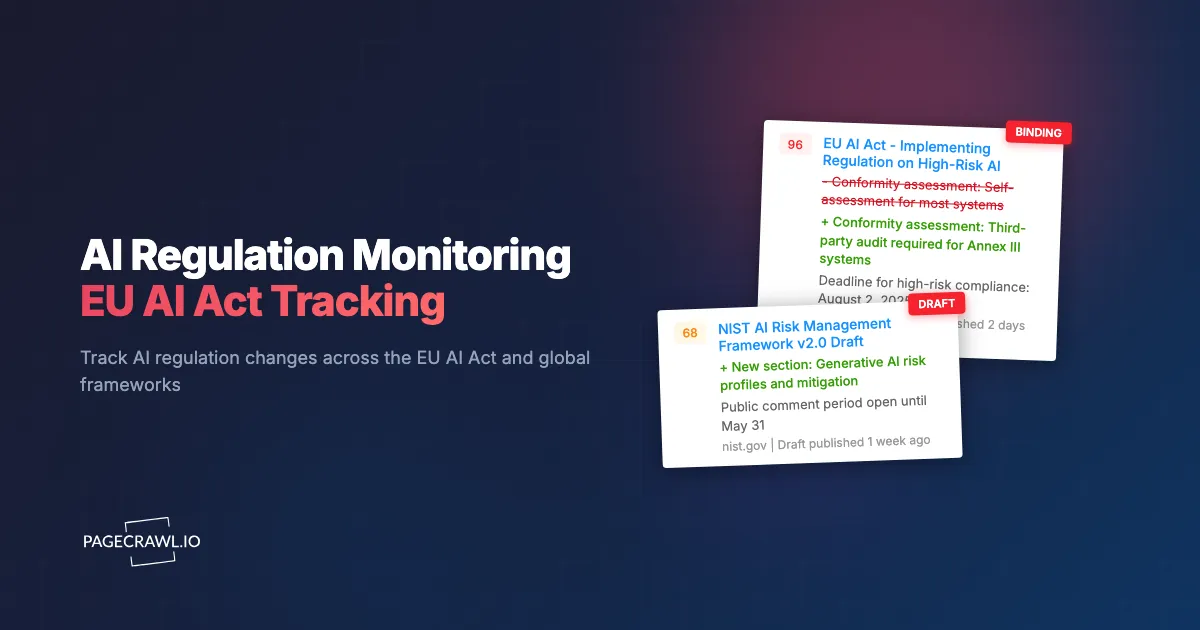
The EU AI Act entered into force in August 2024, but its obligations phase in over three years. The first set of prohibitions took effect in February 2025. Obligations for general-purpose AI model providers followed in August 2025. Enforcement of the general-purpose AI model obligations arrives in August 2026. Transparency requirements for specific AI systems phase in through 2027. If you are building, deploying, or using AI systems, missing a compliance deadline is not a theoretical risk. It is a scheduled event on a published timeline.
The EU AI Act is just one piece. The US has executive orders on AI safety and a patchwork of state-level AI legislation. China's AI regulations cover generative AI, algorithmic recommendations, and deepfakes separately. Canada, Brazil, Japan, South Korea, Singapore, and the UK each have their own frameworks at various stages of development. The International Organization for Standardization (ISO) is publishing AI-specific standards. Industry groups are creating voluntary guidelines that may become de facto requirements.
This guide covers how to set up automated monitoring for AI regulations across jurisdictions, build an AI compliance calendar, and stay ahead of enforcement actions and guidance documents.
What does the AI regulatory landscape look like?
The landscape spans the EU AI Act's risk-based framework, US executive orders and agency rules, a fast-growing patchwork of US state laws, China's targeted regulations, and national frameworks in Canada, the UK, Brazil, and across Asia, plus voluntary standards from ISO and industry bodies. Understanding what exists today and what is coming helps you prioritize what to monitor.
EU AI Act: The Most Comprehensive Framework
The EU AI Act is the world's first comprehensive AI regulation. It classifies AI systems by risk level and applies corresponding obligations:
Unacceptable risk (banned): Social scoring by governments, real-time biometric identification in public spaces (with exceptions), manipulation techniques that exploit vulnerabilities, and emotion recognition in workplaces and schools.
High risk: AI systems used in critical infrastructure, education, employment, essential services, law enforcement, migration, and justice. These require risk assessments, data governance, technical documentation, human oversight, accuracy and robustness standards, and conformity assessment before deployment.
Limited risk (transparency): AI chatbots, emotion recognition systems, and deepfake generators must disclose that they are AI. Users must be informed when they are interacting with an AI system.
General-purpose AI models (GPAI): Providers of foundation models (like large language models) must provide technical documentation, comply with EU copyright law, and publish content policy summaries. Models with "systemic risk" face additional requirements including red-teaming, incident reporting, and cybersecurity measures.
Why monitoring matters: The EU AI Act is a living regulation. The European Commission is publishing delegated acts, implementing acts, guidelines, and codes of practice that fill in the details. The AI Office within the European Commission issues interpretive guidance. National supervisory authorities in each member state develop their own enforcement approaches. Monitoring these evolving sources is essential because the text of the regulation alone does not tell you exactly how to comply.
US Federal AI Policy
The US approach to AI regulation is fragmented across executive actions, agency-specific rules, and legislative proposals:
Executive orders: Presidential executive orders on AI set policy direction and instruct federal agencies to develop specific rules. These can change with each administration. Monitoring the Federal Register for AI-related executive actions catches new directives.
Agency-specific rules: The FTC, SEC, FDA, EEOC, HHS, and other agencies are developing AI-specific guidance within their existing regulatory authority. The FTC has pursued enforcement actions against companies making deceptive AI claims. The FDA is developing frameworks for AI-based medical devices. The SEC is examining AI use in financial services.
NIST AI Risk Management Framework: The National Institute of Standards and Technology publishes the AI RMF, which while voluntary is increasingly referenced in contracts, procurement requirements, and as a baseline for compliance programs.
US State-Level AI Legislation
State legislatures are filling the federal gap with their own AI laws:
Colorado AI Act: Requires developers and deployers of high-risk AI systems to use reasonable care to avoid algorithmic discrimination. Taking effect in 2026, with the exact date having shifted during legislative revisions, which is itself a reason to monitor.
Illinois AI Video Interview Act: Requires employers using AI in video interviews to notify candidates and obtain consent.
New York City Local Law 144: Requires bias audits of automated employment decision tools.
California: Multiple AI bills addressing deepfakes, automated decision systems, and AI transparency. California's legislative output on AI is prolific, with dozens of bills introduced each session.
Other states: Connecticut, Texas, Virginia, Washington, and others have enacted or proposed AI legislation covering topics from facial recognition to algorithmic accountability.
Why monitoring matters: State AI laws are being introduced at a rapid pace. A bill introduced in one state often inspires similar legislation in others. Monitoring state legislatures reveals emerging regulatory trends before they become nationwide patterns.
Global Frameworks
AI regulation is a worldwide phenomenon:
China: Has enacted regulations on algorithmic recommendations (2022), deep synthesis/deepfakes (2023), and generative AI (2023). These are among the world's most specific AI regulations and apply to companies operating in China.
Canada: The Artificial Intelligence and Data Act (AIDA) was proposed as part of Bill C-27, but the bill died on the order paper when Parliament was prorogued in January 2025. New AI legislation is expected to be reintroduced.
UK: Has adopted a "pro-innovation" sector-specific approach rather than comprehensive legislation, with individual regulators (FCA, Ofcom, CMA, ICO) developing AI-specific guidance within their existing mandates.
Brazil: The AI regulatory framework (PL 2338/2023) is progressing through legislative review with a risk-based approach similar to the EU AI Act.
Japan, South Korea, Singapore: Each developing national AI governance frameworks with different approaches ranging from voluntary guidelines to binding legislation.
ISO/IEC standards: ISO/IEC 42001 (AI management system), ISO/IEC 23894 (AI risk management), and other standards in the ISO/IEC 42000 series are being published. These standards are voluntary but increasingly used as compliance benchmarks.
Why does AI regulation monitoring matter?
AI regulation monitoring matters because compliance deadlines are staggered across years, enforcement has begun, and many practical obligations emerge through guidance documents rather than the regulation text itself. Automated monitoring catches these developments on the agency pages where they first appear, before they become expensive surprises.
Compliance Deadlines Are Staggered and Specific
Unlike regulations that take effect on a single date, AI regulations phase in over years with different deadlines for different obligations. The EU AI Act alone has at least six major compliance dates between 2025 and 2027. Missing a deadline because you were unaware of a new implementing act or guidance document is an avoidable failure.
Enforcement Is Beginning
AI regulation enforcement is no longer theoretical:
- The EU AI Office is operational and building enforcement capacity
- The FTC has brought enforcement actions against companies for deceptive AI practices
- State attorneys general are investigating AI-related consumer harm
- National data protection authorities are applying existing data protection law to AI systems
Monitoring enforcement actions, alongside the court dockets, opinions, and AG enforcement pages where disputes surface, tells you how regulators interpret the rules in practice, which is often more instructive than reading the regulation text itself.
New Obligations Emerge Through Guidance
Regulators publish guidance documents, FAQs, opinions, and codes of practice that create practical obligations not explicit in the legislation. The European Data Protection Board's opinions on AI and data protection, the FTC's blog posts signaling enforcement priorities, and NIST's supplementary materials all shape compliance requirements. These documents are published on agency websites, making them ideal targets for regulatory filing and document monitoring.
Competitive Intelligence
Early awareness of regulatory changes creates competitive advantage. Companies that adapt first can:
- Market their compliance as a differentiator
- Influence industry standards and codes of practice
- Avoid last-minute compliance scrambles that disrupt operations
- Advise clients and partners on emerging requirements
What to Monitor
EU Sources
European Commission AI Office: The primary EU body for AI Act implementation. Publishes guidelines, codes of practice, implementing acts, and enforcement guidance.
- URL: digital-strategy.ec.europa.eu (AI section)
- Check frequency: Daily
EUR-Lex: The EU's legal database. New regulations, delegated acts, and implementing acts are published here.
- URL: eur-lex.europa.eu (filter for AI-related documents)
- Check frequency: Every 2-3 days
European Data Protection Board (EDPB): Publishes opinions and guidelines on AI and data protection that affect GDPR compliance of AI systems.
- URL: edpb.europa.eu
- Check frequency: Weekly
National supervisory authorities: Each EU member state designates a national supervisory authority for the AI Act. Monitor the relevant authorities for your operating markets.
- Check frequency: Weekly per authority
US Federal Sources
Federal Register: All federal rulemaking is published here, including AI-related proposed rules, final rules, and notices.
- URL: federalregister.gov (filtered for AI, artificial intelligence, machine learning, algorithmic)
- Check frequency: Daily
NIST AI Program: Publishes the AI Risk Management Framework, guidance documents, and AI standards.
- URL: nist.gov/artificial-intelligence
- Check frequency: Weekly
FTC: Publishes blog posts, enforcement actions, and guidance on AI and consumer protection.
- URL: ftc.gov (AI-related pages)
- Check frequency: Every 2-3 days
White House OSTP: Office of Science and Technology Policy publishes AI-related executive actions and policy documents.
- Check frequency: Weekly
Agency-specific pages: FDA (AI/ML medical devices), SEC (AI in financial services), EEOC (AI in employment), HUD (AI in housing), DOE (AI in energy).
- Check frequency: Weekly per agency
US State Sources
State legislature tracking pages: Each state legislature has a website where bills can be searched and tracked. Search for "artificial intelligence," "algorithmic," "automated decision," and "machine learning."
- Priority states: California, Colorado, Illinois, New York, Texas, Virginia, Washington, Connecticut, Massachusetts
- Check frequency: Weekly during legislative sessions
National Conference of State Legislatures (NCSL): Publishes summaries of AI legislation across all states.
- URL: ncsl.org (AI legislation tracker)
- Check frequency: Every 2 weeks
International Sources
OECD AI Policy Observatory: Tracks AI policies across member countries and publishes comparative analysis.
- URL: oecd.ai
- Check frequency: Every 2 weeks
ISO: Standards publications related to AI (42000 series).
- URL: iso.org
- Check frequency: Monthly
Country-specific regulators: Depending on your operating markets, monitor relevant national AI regulatory bodies.
Industry and Standards Bodies
IEEE: AI ethics and standards working groups.
- Check frequency: Monthly
Partnership on AI: Publishes best practices and position papers.
- Check frequency: Monthly
Industry-specific AI guidelines: Financial services (Bank for International Settlements AI publications), healthcare (WHO AI ethics guidance), automotive (SAE standards for autonomous vehicles).
- Check frequency: Monthly
Setting Up AI Regulation Monitoring with PageCrawl

Step 1: Create Your Source List
Based on your industry, operating markets, and AI usage, compile a list of regulatory sources to monitor. Start with:
- 3-5 primary regulators (EU AI Office, NIST, FTC, your industry regulator, your state AG)
- 2-3 standards bodies (ISO, IEEE, industry-specific)
- 1-2 aggregator sites (NCSL, OECD)
Step 2: Create Monitors for Each Source
For each regulatory source, you can accelerate setup by starting from one of PageCrawl's pre-built monitoring templates. Templates for compliance and regulatory monitoring come pre-configured with content-only tracking, appropriate check frequencies, and AI focus areas tuned for legal and policy content. Select a compliance template, enter the regulatory source URL, and adjust the AI focus to your specific area of interest. This saves significant setup time when you are adding monitors for a dozen regulatory sources at once.
For each regulatory source:
- Navigate to the relevant page (news/updates section, publications page, or guidance library)
- Create a PageCrawl monitor with "Content Only" tracking mode (or use a compliance template as a starting point)
- Set AI focus to: "Alert me about new publications, guidance documents, enforcement actions, and regulatory updates related to artificial intelligence, machine learning, and algorithmic systems. Ignore navigation changes, job postings, and event announcements."
- Set check frequency based on the source's update rate (daily for high-volume sources like the Federal Register, weekly for lower-volume sources)
Step 3: Configure Smart Notifications
Route AI regulation alerts to the right people:
- Legal/compliance team: All alerts via email for documentation and audit trail
- Product/engineering team: Filtered alerts about technical requirements via Slack
- Executive team: Weekly digest of significant regulatory developments
Use webhook integration to route different types of regulatory changes to different notification channels automatically.
Step 4: Use AI Focus Areas to Filter Noise
Regulatory websites contain a lot of content unrelated to AI. AI focus areas in PageCrawl filter alerts to only the relevant changes:
- For the Federal Register: "Focus on rules and notices related to artificial intelligence, machine learning, automated decision systems, and algorithmic accountability. Ignore changes related to other regulatory topics."
- For the FTC: "Focus on enforcement actions, guidance, and blog posts related to AI, automated systems, and algorithmic practices."
- For state legislature sites: "Focus on new bills and bill status changes related to artificial intelligence, algorithmic accountability, automated employment decisions, and facial recognition."
Step 5: Organize with Folders and Tags
Create a structure of labels, folders, and workspaces that mirrors your monitoring priorities:
- EU AI Act (subfolder per source)
- US Federal (subfolder per agency)
- US States (subfolder per state)
- International (subfolder per country)
- Standards (ISO, IEEE, industry)
Tag monitors by urgency: "compliance-deadline," "enforcement," "guidance," "proposed-rule," "final-rule."
Building an AI Compliance Calendar
Monitoring regulatory sources is most useful when combined with a compliance calendar that tracks known deadlines and upcoming milestones.
Known EU AI Act Deadlines
| Date | Obligation |
|---|---|
| February 2025 | Prohibited AI practices ban takes effect |
| August 2025 | Obligations for GPAI model providers |
| August 2026 | High-risk AI system obligations (Annex III) |
| August 2027 | High-risk AI system obligations (Annex I, components of regulated products) |
Note: always confirm deadlines and obligations against the official texts on EUR-Lex and your regulator's website; this article is informational, not legal advice.
How to Use Monitoring to Update Your Calendar
When PageCrawl detects a new regulatory publication:
- Review the alert to determine the type of change (new rule, guidance, deadline, enforcement)
- Extract any new compliance dates and add them to your calendar
- Assess the impact on your AI systems and compliance program
- Assign action items to the responsible team
- Document the change in your regulatory change log
This process transforms raw monitoring alerts into actionable compliance tasks.
Monitoring Enforcement Actions and Guidance
Enforcement actions and guidance documents often reveal more about regulatory expectations than the regulation text itself.
Why Enforcement Actions Matter
Enforcement actions show you:
- Which AI practices regulators consider highest priority
- What evidence regulators look for when investigating AI violations
- What penalties are being applied (fines, injunctions, consent orders)
- Which industries and use cases are under the most scrutiny
Setting Up Enforcement Monitoring
Create dedicated monitors for enforcement action pages:
- EU AI Office: Enforcement and infringement proceedings (once published)
- FTC: Press releases and enforcement action announcements
- State AG offices: Consumer protection enforcement sections
- Data protection authorities: Decision and enforcement pages
Set these monitors to check daily and route alerts straight to your compliance channel. Enforcement actions against other companies are early warnings about regulatory priorities that may affect you next.
Guidance Document Tracking
Guidance documents clarify how regulators interpret regulations. Monitor:
- European Commission guidance on AI Act implementation
- NIST supplementary materials and profiles for the AI RMF
- FTC staff blog posts on AI topics
- Agency-specific guidance (FDA on AI/ML-based SaMD, SEC on AI in trading)
For a broader look at regulatory monitoring beyond AI, including how to track changes to privacy policies and terms of service, see our dedicated guide.
Use Cases by Organization Type
AI Product Companies
Companies building AI products face the most direct regulatory impact:
What to monitor:
- EU AI Act implementing acts that define technical standards for your risk category
- GPAI model obligations if you provide foundation models
- Conformity assessment requirements and timelines
- Standards body publications that will define compliance benchmarks
Priority sources: EU AI Office, NIST, ISO/IEC 42001, industry-specific regulators for your vertical.
Enterprise AI Adopters
Organizations deploying AI within their operations (hiring tools, customer service bots, fraud detection) need to monitor:
What to monitor:
- High-risk AI system obligations in your use case category
- Transparency requirements for AI systems interacting with people
- Sector-specific AI guidance from your industry regulator
- State-level laws affecting automated decision-making in employment, housing, or lending
Priority sources: EEOC (employment AI), FTC (consumer-facing AI), state legislature trackers, your industry regulator.
Law Firms and Consultancies
Legal professionals advising on AI compliance need comprehensive monitoring:
What to monitor:
- All primary regulatory sources across jurisdictions where clients operate
- Court decisions interpreting AI regulations
- Regulatory agency opinions and guidance
- Academic and industry publications that influence regulatory thinking
Priority sources: Full coverage across EU, US federal, US state, and relevant international jurisdictions. Law firms typically need the most extensive monitoring setup.
Compliance Teams
Internal compliance teams need monitoring that feeds directly into their compliance management processes:
What to monitor:
- Regulatory changes that affect your existing AI systems
- New obligations that require process or system changes
- Enforcement actions that signal regulatory priorities
- Guidance that clarifies ambiguous requirements
Priority sources: Jurisdictions where you operate, agencies that regulate your industry, standards bodies whose frameworks you follow.
For organizations with broader compliance monitoring needs beyond AI, our guide on compliance monitoring software covers tools and strategies for tracking regulatory changes across all areas of compliance. See also our comprehensive guide on regulatory compliance monitoring for multi-jurisdiction tracking approaches.
Archiving Regulatory Content
Regulatory pages change. A guidance document that says one thing today may be revised next month. Maintaining an archive of regulatory content is important for:
- Documenting your compliance efforts (showing you were aware of requirements at the time)
- Tracking how regulatory interpretation evolves over time
- Supporting legal analysis that requires historical regulatory context
- Audit evidence showing your monitoring process captures changes
PageCrawl automatically stores historical versions of monitored pages. You can review the full history of any regulatory page to see what it said on any given date, and package that history into an audit trail for a regulator when an examiner asks for evidence. For organizations that need formal archiving capabilities, see our guide on website archiving as an alternative to the Wayback Machine.
Scaling Your AI Regulation Monitoring
As AI regulation expands, your monitoring needs will grow. Here are strategies for scaling:
Tiered Monitoring
Not all sources need the same check frequency:
- Tier 1 (daily): Primary regulators for your jurisdiction, enforcement action pages, sources with known upcoming deadlines
- Tier 2 (every 2-3 days): Secondary regulators, standards bodies, aggregator sites
- Tier 3 (weekly): International sources outside your primary markets, academic and industry publications
Automated Routing and Triage
Use webhook integration to build automated workflows:
- PageCrawl detects a regulatory change
- Webhook sends change data to your system
- Your system classifies the change by jurisdiction, topic, and urgency
- Classified changes are routed to the appropriate team
- High-urgency changes are escalated as soon as a check detects them
- Lower-urgency changes are batched into daily or weekly digests
Team-Based Monitoring
Distribute monitoring responsibilities across team members:
- Legal team owns EU and US federal monitoring
- Compliance team owns enforcement action monitoring
- Product team owns technical standards monitoring
- Regional teams own their jurisdiction's regulatory sources
Shared PageCrawl workspaces with role-based notification routing keep everyone informed about the changes that affect their area.
Choosing your PageCrawl plan
PageCrawl's Free plan lets you monitor 6 pages with 220 checks per month, which is enough to validate the approach on your most critical pages. Most teams graduate to a paid plan once they see the value.
| Plan | Price | Pages | Checks / month | Frequency |
|---|---|---|---|---|
| Free | $0 | 6 | 220 | every 60 min |
| Standard | $8/mo or $80/yr | 100 | 15,000 | every 15 min |
| Enterprise | $30/mo or $300/yr | 500 | 100,000 | every 5 min |
| Ultimate | $99/mo or $999/yr | 1,000 | 100,000 | every 2 min |
Annual billing saves two months across every paid tier. Enterprise and Ultimate scale up to 100x if you need thousands of pages or multi-team access.
Missing a single EU AI Act implementing act or a new FTC guidance document can mean weeks of reactive compliance work and the legal exposure that comes with it. All plans include the PageCrawl MCP Server, so your compliance team can ask Claude to summarize every regulatory change detected across all monitored sources over the last quarter, pull the exact diff for a specific guidance document, and build a timeline of when your team was notified, turning your monitoring archive into a queryable compliance record rather than a list of past alerts. AI assistants can create monitors through conversation on every plan, including Free. Standard at $80/year covers 100 monitors with 15-minute checks, enough to watch the EU AI Office, NIST, FTC, and state legislature trackers for your primary markets without gaps. Enterprise at $300/year extends that to 500 regulatory sources with 5-minute checks and full timestamped history, which is exactly the kind of documented audit trail assessors and regulators expect to see when they ask how your team tracks evolving obligations.
Getting Started
Begin with three monitors: the EU AI Office publications page, the NIST AI program page, and the FTC press releases page filtered for AI topics. Set content-only tracking mode with daily checks and AI focus areas targeting AI-related updates. Configure email notifications to your compliance team.
This minimal setup takes 15 minutes and captures the most significant AI regulatory developments across the two largest regulatory markets. Within the first week, you will likely see at least one relevant update that you would have missed without monitoring.
From there, add state legislature monitors for your operating states, enforcement action pages for your industry regulators, and international sources for your global markets. PageCrawl's free tier covers 6 monitors, sufficient for a focused monitoring setup. The Standard plan ($80/year) with 100 monitors supports comprehensive multi-jurisdiction monitoring, while the Enterprise plan ($300/year) with 500 monitors handles global enterprise compliance programs.